
ATBC vs. Hexamoll® DINCH for Children's Toys: A Head-to-Head Plasticizer Selection Guide
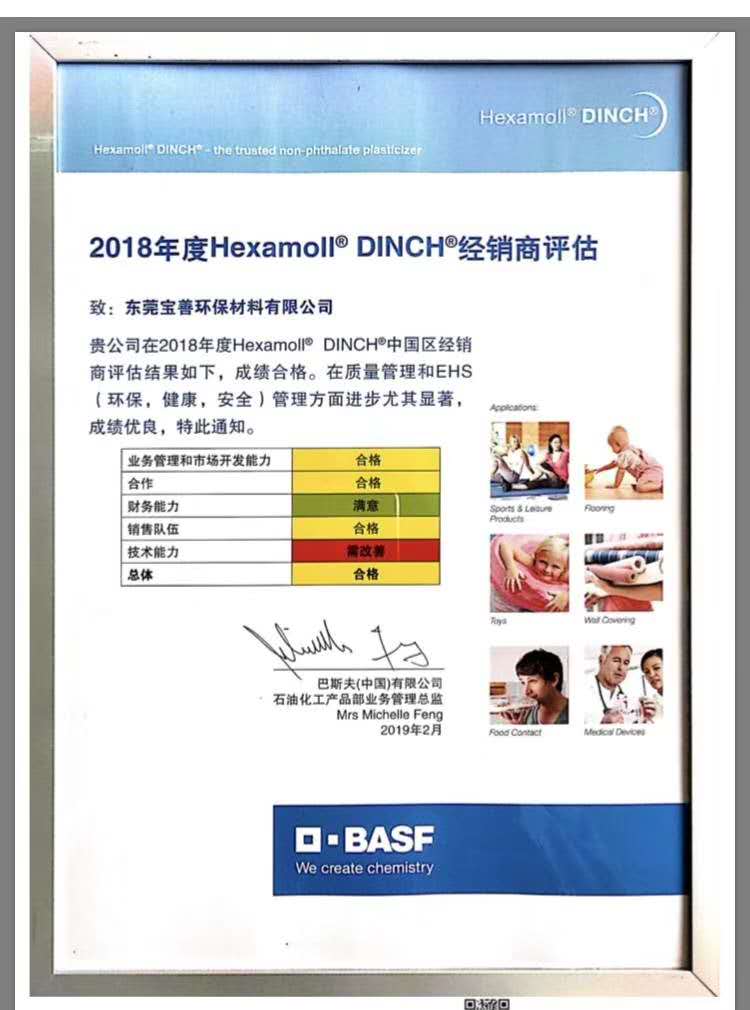
Hexamoll® DINCH reaches the Chinese market through an authorized distribution channel; ATBC sits in the same phthalate-free category but is a different chemistry with a different documentation profile.
A toy programme that fails a compliance review rarely fails because the plasticizer was “wrong” in the abstract. It fails because the chosen plasticizer could not hold the required hardness, could not flow through the mould, or could not produce the test documents the destination market demands. Acetyl Tributyl Citrate (ATBC) and Hexamoll® DINCH are the two phthalate-free plasticizers most often weighed against each other in children's toy formulations, and they are not interchangeable: they belong to different chemical families, they carry different regulatory documentation, and they behave differently inside a plastisol.
For a decision-stage buyer, the short answer is this. Hexamoll® DINCH, the non-phthalate plasticizer supplied by BASF, is documented as approved for medical devices and food contact materials, with a low migration rate and a toxicological safety profile, and it is described as FDA/EFSA compliant. ATBC is a citrate-ester plasticizer whose demand is concentrated in children's toys and food packaging. In practice, DINCH is the lower-risk choice when the buyer must reference an established regulatory dossier; ATBC is evaluated when a citrate-ester chemistry fits the formulation and the compliance file can be built on batch-level test data.
The rest of this guide compares the two on the criteria a toy buyer actually decides on — regulatory approval, testing documentation, hardness and process behaviour, cold-temperature demands and supply reliability — and closes with a side-by-side table, a step-by-step selection workflow and a FAQ.
1. The Real Decision: Why ATBC vs. DINCH Is Not a Straight Substitution
Between ATBC and Hexamoll® DINCH there is no “compliant versus non-compliant” gap. The phthalate question is already closed for toys in the European Union: REACH restricts DEHP, DBP and BBP to concentrations below 0.1% in toys and childcare articles. Neither ATBC nor DINCH belongs to that restricted group. What remains open is the set of questions that actually stops toy projects:
- Can you document what you claim? A material that passes a laboratory test but cannot be traced batch by batch is a documentation risk, not a technical one.
- Will it perform in your mould? Hardness, gelation and plastisol flow decide whether a slush-moulded toy fills completely and demoulds cleanly.
- Will it still perform after shipping? Cold-climate transport, drop testing and long shelf life expose the difference between a datasheet and a validated formulation.
Because those three risks are answered by different parts of the supply chain — the resin, the plasticizer and the testing laboratory — the comparison should be run as a documentation and process exercise rather than as a chemical popularity contest. A buyer who compares ATBC and DINCH only on price per kilogram, without an equal-hardness comparison and without a batch-level test plan, is measuring the wrong variables.
2. Why ATBC and DINCH Are Being Compared Now
Two market movements pushed these two plasticizers onto the same evaluation sheet.
First, the PVC paste resin base is growing, and it is concentrated in Asia. The global PVC paste resin market was estimated at USD 2.67 billion in 2024 and is projected to reach USD 4.473 billion by 2035 (Market Research Future). Asia-Pacific accounts for over 60% of global PVC paste grade resin volume, and China alone accounts for more than 45% of consumption. Toy and coating plants in China and Southeast Asia are therefore where plasticizer decisions are made most often — and where documentation requirements are tightening fastest.
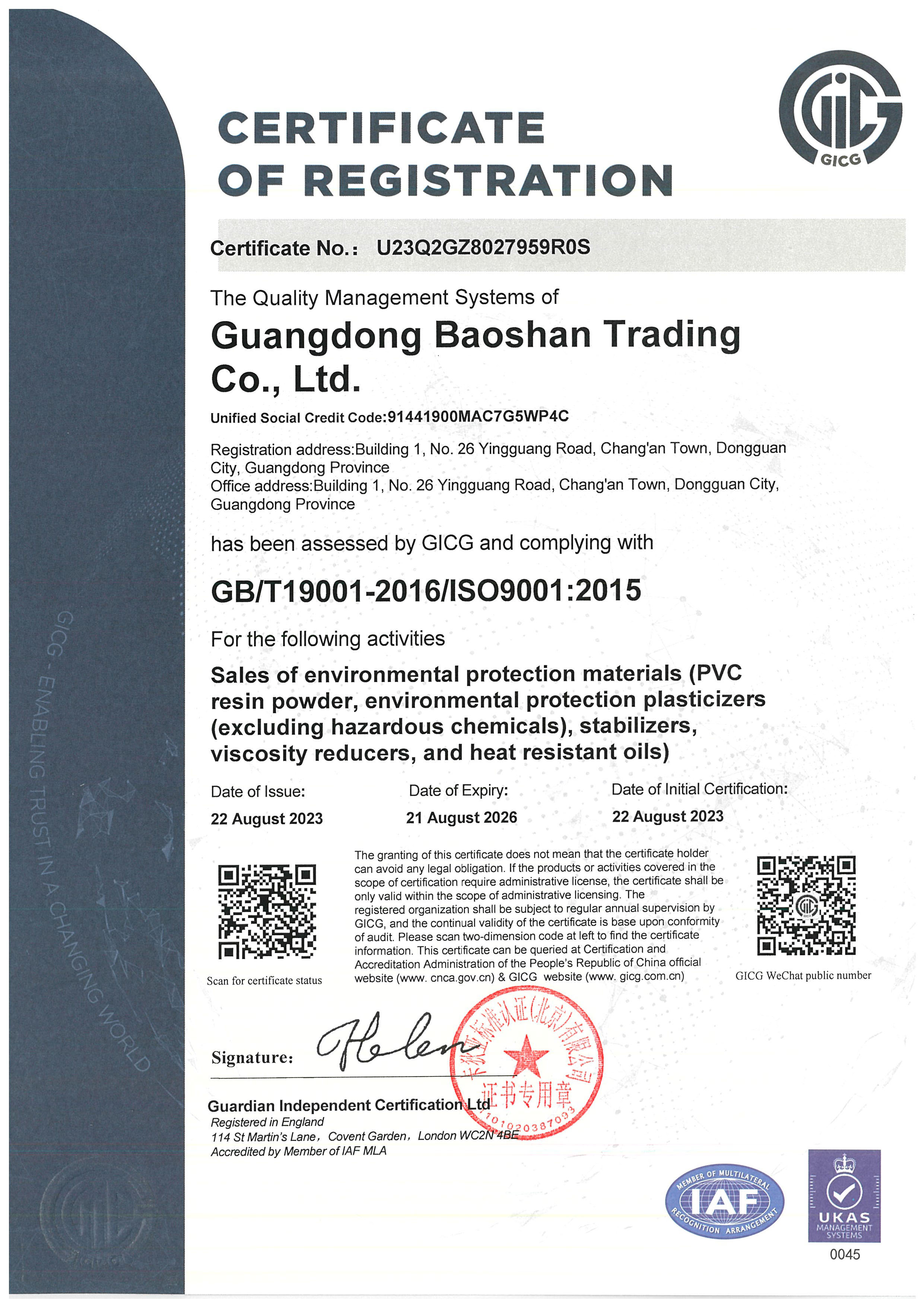
Quality-system documentation is part of the plasticizer selection file, not a separate administrative task.
Second, the plasticizer side is shifting toward non-phthalate options. The global eco-friendly plasticizers market was valued at USD 5.03 billion in 2024 and is projected to reach USD 7.55 billion by 2030, a 7.0% CAGR (MarketsandMarkets). The same substitution logic crosses into medical PVC: the medical plastics market, including PVC for medical devices, was valued at USD 61.4 billion in 2025 with a projected 6.0% CAGR (Grand View Research). A plasticizer that can serve toys, food-contact items and medical devices at once is commercially attractive — which is precisely the position Hexamoll® DINCH occupies.
Guangdong Baoshan Trading Co., Ltd., founded in 1994 and headquartered in Dongguan, Guangdong, has operated inside this shift for more than three decades, moving from manufacturing into PVC industry-chain material distribution. The company is the authorized distributor of BASF's eco-friendly plasticizer Hexamoll® DINCH in China, where it has ranked first in sales in the Asia-Pacific region for many consecutive years, and the authorized distributor of Eastman TXIB in China.
3. ATBC vs. Hexamoll® DINCH: Chemistry, Approval and Performance
3.1 What each plasticizer actually is
Acetyl Tributyl Citrate (ATBC) is a citrate-ester plasticizer. Citrate esters are normally grouped with bio-based plasticizers because they are derived from citric acid, and ATBC demand is concentrated where non-phthalate chemistry and food-adjacent use are both required: children's toys and food packaging. Third-party research from Intel Market Research projected the ATBC market for children's toys and food packaging to reach USD 149 million by 2025.
Hexamoll® DINCH is a non-phthalate plasticizer supplied by BASF. It is documented as approved for medical devices and food contact materials because of its low migration rate and toxicological safety profile, and it is described as FDA/EFSA compliant. Its commercial distribution in China is handled by Guangdong Baoshan Trading Co., Ltd. under an authorized distributorship.
The two products therefore sit in the same regulatory category — phthalate-free — but not in the same chemistry class. That difference is what produces different hardness curves, different plastisol behaviour and different documentation packages. It is also worth naming the wider toolbox so the question is not treated as a binary: dioctyl terephthalate (DOTP), polymeric polyester plasticizers and epoxidized soybean oil (ESO) are also used in flexible PVC, and low-viscosity formulation additives such as Eastman TXIB™ are used alongside a primary plasticizer rather than instead of it.
3.2 Regulatory approval: what can actually be documented
Regulatory approval is not a single badge. It is a set of documents that must line up with the destination market.
- EU / REACH: the phthalates DEHP, DBP and BBP are restricted to below 0.1% in toys and childcare articles (ECHA REACH Regulation). Both ATBC and DINCH fall outside that restriction.
- Food contact and medical: Hexamoll® DINCH is approved for medical devices and food contact materials and is FDA/EFSA compliant (BASF). This makes DINCH the simpler choice when a toy line shares tooling or materials with food-contact or medical PVC.
- ATBC documentation: ATBC is established in toy and food-packaging applications, but its public regulatory evidence base is thinner. The practical route is to require batch-level test reports covering phthalates, heavy metals, PAHs, brominated flame retardants, RoHS, BPA, PFAS and REACH.
That last point is where supplier capability matters more than the plasticizer name. Baoshan operates an in-house R&D and chemical analysis laboratory equipped with Agilent GC-MS, ICP-MS and Waters LC-MS/MS instruments, tests every batch of incoming material, and provides free testing for phthalates, heavy metals, bisphenol A and organotin. The company works to ISO 9001 and has passed a joint audit by BASF's Petrochemical Division, Quality Management Department and Environment, Health and Safety Department. For a toy buyer, that means the traceability requirement can be satisfied at material-receiving stage rather than only at finished-goods stage.
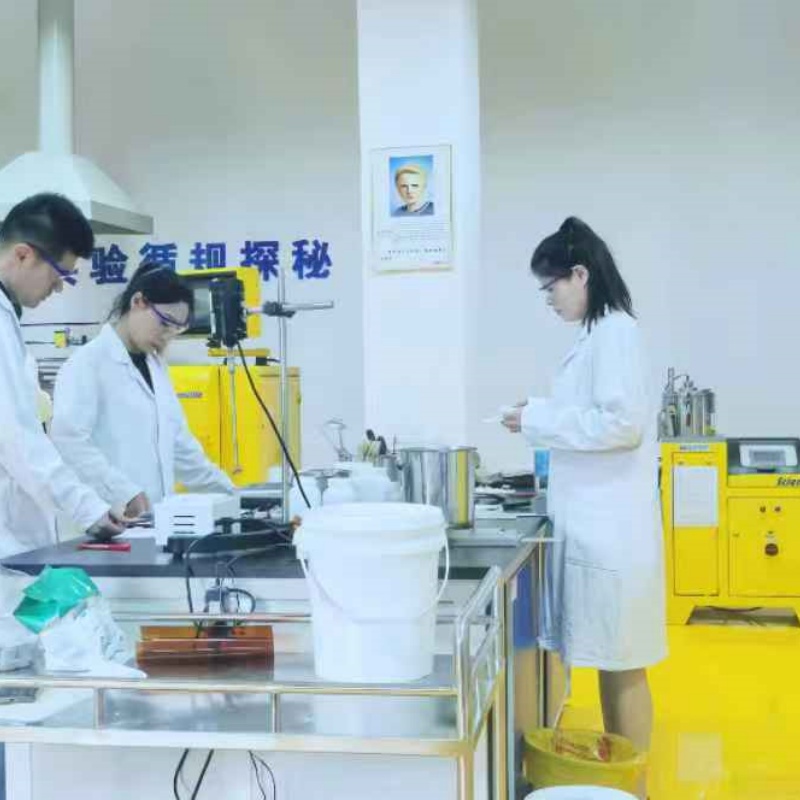
Incoming-material testing converts a plasticizer claim into a traceable document.
3.3 Processing and hardness: where the two plasticizers separate
Hardness, not plasticizer identity, is the first technical constraint in a toy formulation — and hardness is set by plasticizer loading relative to resin. Two plasticizers with different plasticizing efficiency reach the same hardness at different loading levels, which means a like-for-like comparison must always be run at equal hardness on the finished part, never at equal parts-per-hundred of plasticizer.
Three process questions then decide the outcome:
- Plastisol flow. Slush moulding and coating both depend on the plastisol filling the mould or coating head before gelation. Where a formulation needs lower viscosity without changing the primary plasticizer, formulators add a low-viscosity additive: Eastman TXIB™ is recognized as the lowest viscosity (9 cps) additive available for the flexible PVC industry, used to optimize vinyl plastisol flow. TXIB is a formulation additive, not a replacement for the primary plasticizer, and Baoshan distributes it in China as an authorized Eastman partner.
- Low-temperature behaviour. Toys are shipped, stored and used in cold conditions, and low-temperature flexibility is a property of the complete resin–plasticizer–stabilizer system. Rather than accepting a datasheet figure, buyers should request low-temperature performance data measured on their own hardness target and their own paste resin.
- Purity and assay. Assay specification and batch certificates should be treated as purchasing requirements, not as marketing data. Consistent assay reduces hardness drift between production lots — the most common reason a toy passes the first trial and fails the third production run.
4. A Step-by-Step Selection Workflow for Children's Toy Programmes
The workflow below turns the ATBC-versus-DINCH question into a sequence of decisions that can be closed one at a time.
- Lock the destination market and its document set. EU toy rules, food-contact rules and medical-device rules require different evidence. Decide which one the product must satisfy before the first trial, because the document list determines how much weight DINCH's approvals carry in your specific case.
- Define physical targets as pass/fail numbers. Shore hardness, tensile and elongation, low-temperature drop performance, migration limits and surface finish should be written as measurable limits, not as preferences. Without these numbers, the plasticizer comparison has no reference point.
- Map the process. Slush moulding, rotational casting, coating and dripping impose different viscosity and gelation requirements, and determine whether a low-viscosity additive will be needed alongside the primary plasticizer.
- Run the trial at equal hardness. Prepare formulations with ATBC and with Hexamoll® DINCH at the same target hardness, and record how much of each plasticizer is required. That loading figure becomes your cost and process baseline.
- Decide single plasticizer or blend. Some programmes use one plasticizer; others use a primary plasticizer plus a low-viscosity additive or a secondary plasticizer such as a polymeric polyester plasticizer or ESO.
- Validate with a matched sample, then test. Request samples formulated against your own paste resin and hardness target, then verify phthalates, heavy metals, BPA, organotin, PAHs, brominated flame retardants, RoHS, PFAS and REACH on the trial material.
- Qualify the supply side last — but do not skip it. A plasticizer that passes the laboratory but arrives late stops the line. Check buffer stock, packaging, warehouse capacity and logistics coverage against your production calendar.
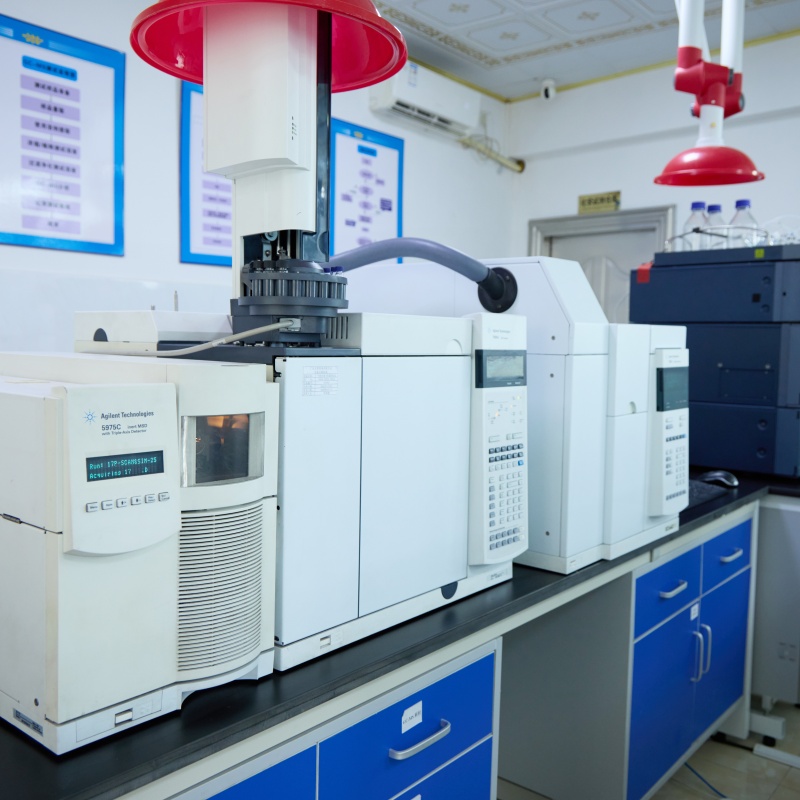
Analytical verification closes the loop between a trial formulation and a repeatable production specification.
5. Use Cases: Where Each Choice Fits
PVC slush moulding toy material (doll bodies, animal figures, soft heads). Paste resin plus plasticizer plus a phenol-free Ca/Zn stabilizer forms the base system. At the hardness levels typical of slush-moulded articles, the plasticizer determines both the feel and the demoulding behaviour. Both ATBC and DINCH can be trialled; DINCH adds a documented medical-device and food-contact approval to the file, which shortens the compliance discussion if the same plant also runs regulated products.
PVC coated material (play mats, inflatable toys, coated fabric). Coating lines are more sensitive to plastisol viscosity than to plasticizer chemistry. Where the coating head requires lower viscosity, a low-viscosity additive such as Eastman TXIB™ (9 cps) is used to optimize the plastisol flow rather than changing the primary plasticizer.
PVC dripping glue material (soft detailing, grippers, decorative parts). Dripping and dispensing demand controlled flow and clean gelation, so these programmes are normally specified as a plasticizer-plus-viscosity-modifier combination rather than as a single-component choice.
Food-contact and medical crossover. Where one production site runs toys alongside food-contact or medical PVC, plasticizer selection should be made once for the whole site. DINCH's approved status for medical devices and food contact materials reduces changeover and documentation risk across the shared equipment.
Regional programmes in China and Southeast Asia. Toy and coating production in the region is served from Dongguan, Guangdong, with warehousing and logistics covering China and Southeast Asia, including a Vietnam operation within the group.
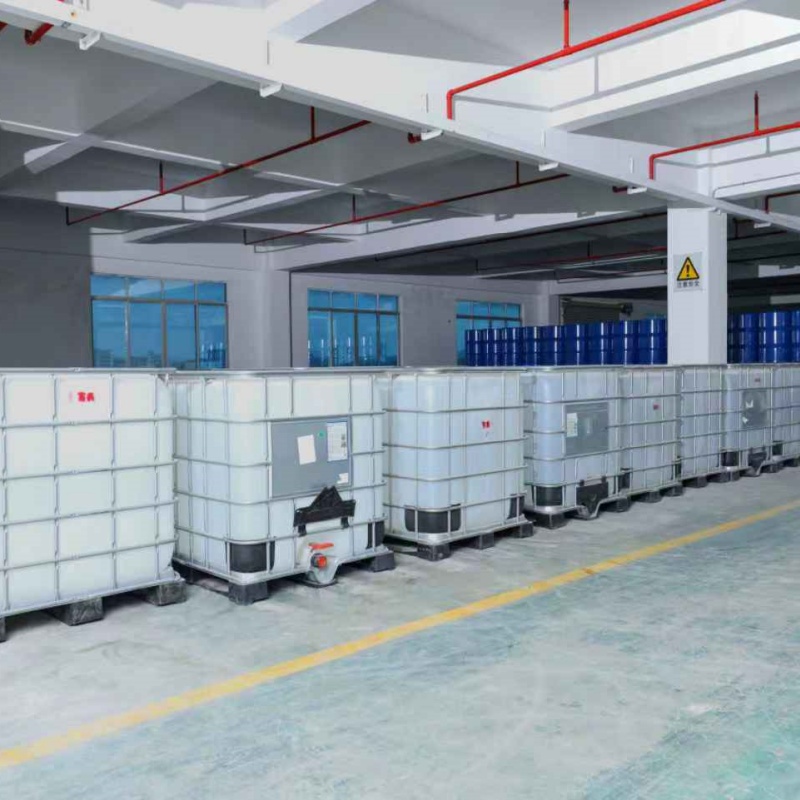
Buffer stock converts a plasticizer specification into a production schedule that can be kept.
6. ATBC vs. Hexamoll® DINCH at a Glance
The table below uses only documented, attributable points. It is a starting sheet for a decision, not a substitute for a trial on your own formulation.
| Comparison dimension | Acetyl Tributyl Citrate (ATBC) | Hexamoll® DINCH |
|---|---|---|
| Plasticizer class | Citrate-ester plasticizer, generally grouped with bio-based plasticizers | Non-phthalate plasticizer supplied by BASF |
| Documented regulatory position | Established in children's toys and food packaging; buyer should build the file on batch test reports | Approved for medical devices and food contact materials; FDA/EFSA compliant (BASF) |
| Documented performance attribute | Demand concentrated in toys and food packaging (third-party research) | Low migration rate and toxicological safety (BASF) |
| Market context | ATBC market for children's toys and food packaging projected at USD 149 million by 2025 (Intel Market Research) | Eco-friendly plasticizers market USD 5.03 billion in 2024, projected USD 7.55 billion by 2030 at 7.0% CAGR (MarketsandMarkets) |
| Process question to resolve | Confirm hardness loading and low-temperature performance on your own paste resin | Confirm hardness loading and plastisol flow for your mould or coating line |
| Verification route | Supplier laboratory reports for phthalates, heavy metals, BPA, organotin, PAHs, RoHS, PFAS, REACH | Supplier laboratory reports plus BASF regulatory documentation |
| China distribution reference | Confirm current grade and availability with the supplier | Authorized China distributor: Guangdong Baoshan Trading Co., Ltd. |
7. FAQ: ATBC vs. Hexamoll® DINCH for Children's Toys
Is ATBC or Hexamoll® DINCH the better choice for EU toy compliance?
Both are outside the phthalate groups restricted by EU REACH, which limits DEHP, DBP and BBP to below 0.1% in toys and childcare articles. The practical difference is documentation: Hexamoll® DINCH is approved for medical devices and food contact materials and is FDA/EFSA compliant, so its regulatory dossier can be referenced directly, while ATBC should be supported with batch-level test reports for phthalates, heavy metals, BPA, organotin and related substances issued by the supplier's laboratory.
Which plasticizer works better in slush moulding and coating processes?
Neither plasticizer alone determines process performance — hardness, plastisol viscosity and gelation do. The comparison must be run at equal hardness on the finished part, not at equal plasticizer loading. Where a formulation needs lower plastisol viscosity, formulators add a low-viscosity additive rather than switching the primary plasticizer: Eastman TXIB™ is recognized as the lowest viscosity (9 cps) additive available for the flexible PVC industry, used to optimize vinyl plastisol flow.
How should the cost of ATBC and DINCH be compared?
Not by list price per kilogram. The meaningful figure is delivered cost per finished part at the required hardness, which combines plasticizing efficiency (how much plasticizer is needed to reach the target hardness), process scrap, testing and documentation cost, and rework risk. Both are phthalate-free plasticizers whose economics move with grade, volume and feedstock markets, so a formulation-based quote is the only reliable comparison.
Can samples be supplied before a toy programme commits to volume?
Yes. Sample-based validation should precede any volume commitment, because hardness, migration and low-temperature behaviour depend on the specific resin–plasticizer–stabilizer system rather than on the plasticizer alone. Suppliers can prepare samples matched to a trial formulation, and Guangdong Baoshan Trading Co., Ltd. supports this with an in-house laboratory that tests every batch of incoming material and provides free testing for phthalates, heavy metals, bisphenol A and organotin.
What lead times and stock levels apply to DINCH-based toy formulations?
Hexamoll® DINCH and Eastman TXIB™ are supplied in China through authorized distribution by Guangdong Baoshan Trading Co., Ltd., which holds a safety stock of more than three months for bulk European materials in a 20,000-square-metre self-built warehouse with 16 liquid storage tanks, and covers China and Southeast Asia through land and sea logistics. Confirm the delivery schedule at quotation stage. To start, send your target hardness, mould type and destination market to request a formulation-matched sample and quotation.
8. Conclusion: A Decision Rule You Can Apply Tomorrow
The ATBC-versus-DINCH decision resolves into three questions, in order. If the product must reference an established regulatory dossier for food contact or medical use — or shares equipment with such products — Hexamoll® DINCH is the lower-risk starting point, because its approvals are documented. If the formulation calls for a citrate-ester plasticizer and the compliance file will be built on batch-level testing, ATBC remains a valid candidate and should be trialled at equal hardness against DINCH. If the constraint is process flow rather than plasticizer chemistry, the answer may be neither substitution nor a plasticizer change, but a low-viscosity additive such as Eastman TXIB™ used alongside the primary plasticizer.
Whichever route is chosen, the decision should be closed with documents rather than with claims: a matched sample, a trial at equal hardness, and batch-level test reports covering phthalates, heavy metals, BPA, organotin, PAHs, brominated flame retardants, RoHS, PFAS and REACH.
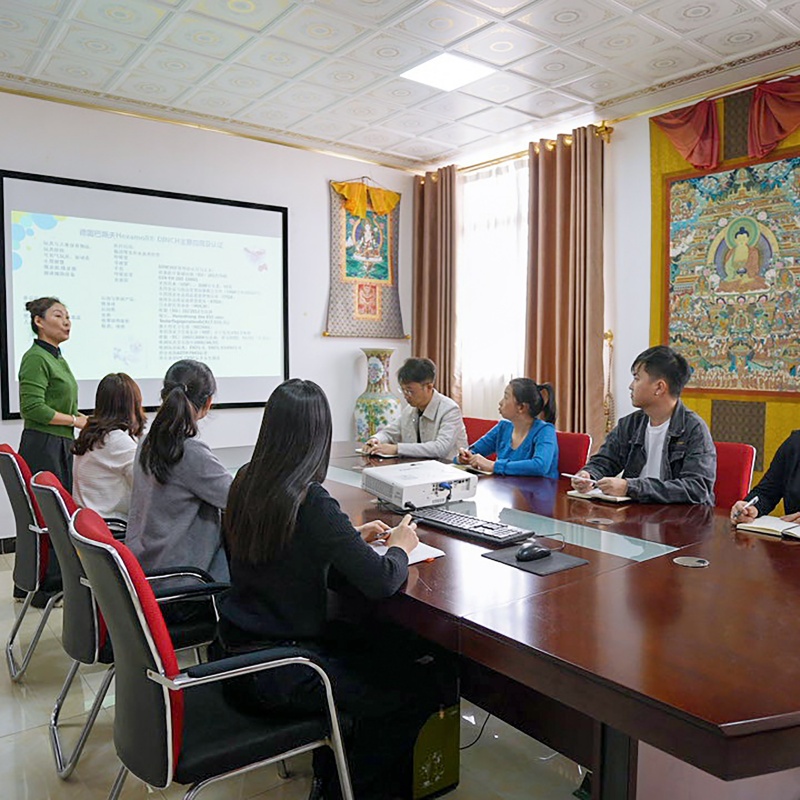
Sample coordination and formulation review are handled directly with the technical team.
Next step: request a formulation-matched sample
Guangdong Baoshan Trading Co., Ltd. supplies PVC vinyl materials — paste resins, blending resins, eco-friendly plasticizers, viscosity reducers and stabilizers — and is the authorized China distributor of BASF Hexamoll® DINCH and Eastman TXIB. Send your target hardness, process type and destination market to receive a matched sample and a formulation-based quotation.
Website: www.baoshancl.cn | Blog: blog.baoshancl.cn
Email: misscheng1984@163.com | Tel: +86 13580992838
WhatsApp: +84 865388399
Address: Building 1, No. 26, Yingguang Road, Chang'an Town, Dongguan City, Guangdong Province, China
Have Questions or Need More Details?
Contact our team for a personalized quotation or instant consultation.
Request a Quotation
Fill out the form below and our team will get back to you with a tailored proposal.
WhatsApp Direct Chat
Prefer to chat in real-time? Message us on WhatsApp for instant assistance & quick answers.
- Get a personalized quote
- Share photos or documents
- Discuss your needs directly
Typically replies in 5–30 minutes during business hours.