
PVC Paste Resin vs. PVC Resin Powder: An Explainer on Grades, K Values, and Where Each One Fits
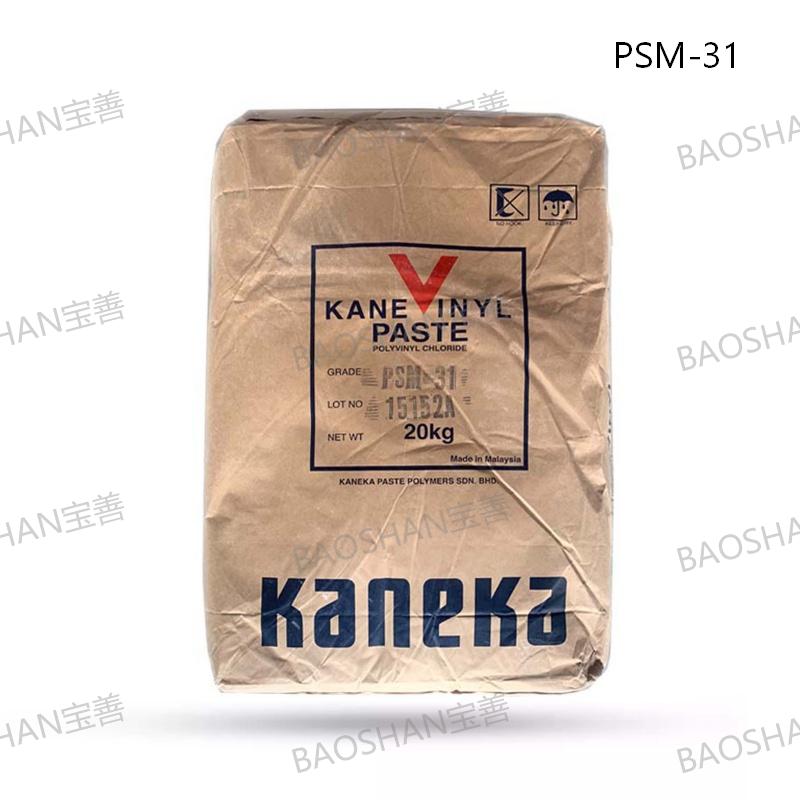
Two white powders. The same CAS entry on both bags. The same three letters on the label. And yet one of them will flow into a smooth plastisol coating in a gelling oven, while the other one will sit in the tray as a gritty, unmelted mass. For product teams and sourcing teams new to flexible PVC, this is usually the first expensive lesson.
This explainer is written for the people who have to specify PVC for the first time — toy developers, coating formulators, medical device engineers, and the buyers who then have to turn those choices into a purchase order. It covers the three PVC material families, the specifications that actually separate them, and the additives that have to be chosen at the same time.
Short answer: PVC paste resin is produced for dispersion. It is mixed with plasticizer into a liquid plastisol and then gelled in an oven — this is the family used for slush molding, coating, dipping and foaming. PVC resin powder (general-purpose suspension resin) is produced for melt processing: it is dry-blended and then calendered, extruded or moulded under heat and shear. PVC blend resin powder is a third, easily confused family — a fine PVC powder used as a blending component inside a plastisol to adjust viscosity and cost, not as a replacement for paste resin.
Why the Two Are So Easy to Confuse
Three things make the mistake easy to make.
First, both materials are sold as white powder in similar packaging. Second, both specification sheets lead with the same headings — K value, particle size, apparent density — even though those numbers describe fundamentally different particle structures, so they are not comparable across families. Third, vinyl polymers share the CAS entry 9002-86-2 across the family, which means a CAS number never tells you which family you are buying.
The consequences show up late, usually in production rather than in the sample bag. A suspension resin substituted into a plastisol will not disperse properly; the paste gels unevenly and slush-moulded parts come out with thick walls on one side and thin walls on the other. A paste resin used as a dry-blend component behaves in the opposite way: the powder is so fine that it dusts, feeds inconsistently, and can produce weak or chalky melt. Either way, the cost of the error is a scrapped batch, a delayed shipment, and a formulation team starting over.
The question that prevents all of it can be put in a single email line: "Is this an emulsion or micro-suspension paste grade designed for plastisol, or a suspension grade designed for dry blending — and what is the grade name and K value?"
Industry Background: Where the Demand Is Coming From
PVC paste resin demand is concentrated and growing. The global PVC paste resin market size was estimated at USD 2.67 billion in 2024 and is projected to reach USD 4.473 billion by 2035 (Market Research Future). Asia-Pacific accounts for over 60% of global PVC paste grade resin volume, with China alone responsible for more than 45% of consumption (Industry Analysis Report).
One caution is worth keeping in mind. Published market values for this category differ sharply because institutions define "paste grade" differently, and some definitions include a wider set of emulsion PVC products. Treat any single market number as definition-dependent — and ask the same question about the specifications you are comparing. If two spec sheets describe the same grade differently, the definition is usually the reason.
The additive side is moving as well. The global eco-friendly plasticizers market was valued at USD 5.03 billion in 2024 and is projected to reach USD 7.55 billion by 2030 at a 7.0% CAGR (MarketsandMarkets). Acetyl tributyl citrate (ATBC) demand for children's toys and food packaging is projected to reach USD 149 million by 2025 (Intel Market Research). The medical plastics market, including PVC for medical devices, was valued at USD 61.4 billion in 2025 with a projected 6.0% CAGR (Grand View Research).
Regulation explains much of that shift. Under EU REACH, phthalates including DEHP, DBP and BBP are restricted to concentrations below 0.1% in toys and childcare articles (ECHA). That single limit is why a conversation about paste resin almost always becomes a conversation about plasticizers within the first two emails.
The Three PVC Families Explained
1. PVC Paste Resin
Paste resin is polymerized as an emulsion or micro-suspension, which produces very small primary particles that remain dispersible rather than forming free-flowing granules. The practical result is that paste resin can be mixed with plasticizer at room temperature to form a plastisol — a stable, pourable liquid.
The plastisol is then shaped by low-shear, low-temperature methods: poured into a slush mould, spread as a coating, sprayed, dipped, or printed as a dripping glue. Only afterwards does heat convert it into a solid, inside a gelling oven. The whole logic of the material is built around that two-stage behaviour.
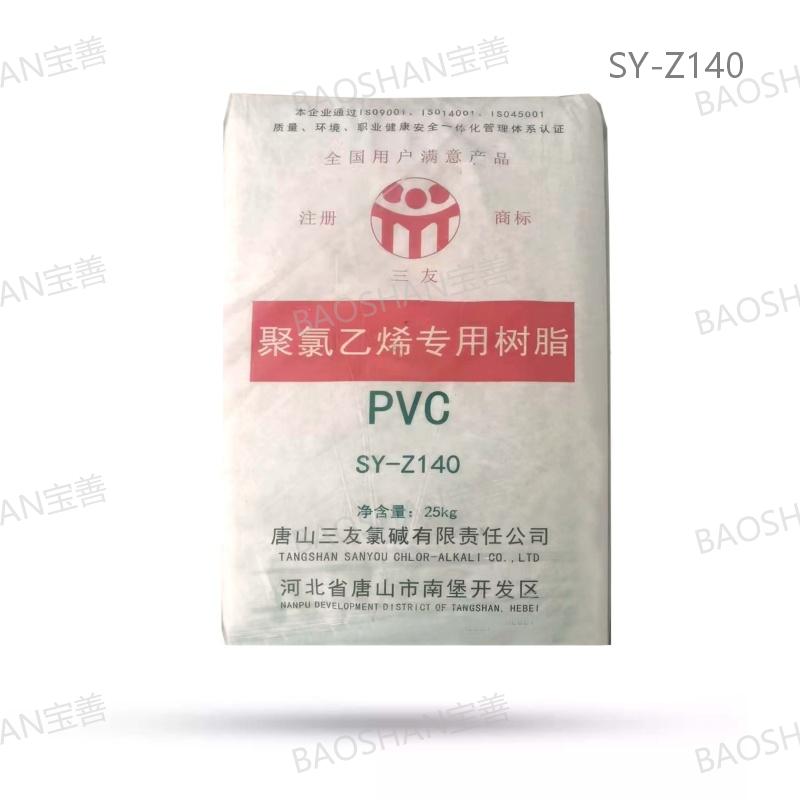
Within this family, grades are positioned mainly by K value and particle morphology. Grades such as KANEVINYL PASTE SH-14, PSM-31, PSH-10S and PR-G are typically specified into plastisol systems used in slush molding and coating, while foam paste resin SY-Z140 is positioned for foaming formulations where the cell structure has to stay open and uniform through the oven.
2. PVC Resin Powder (General-Purpose Suspension Resin)
General-purpose suspension resin is polymerized in droplets suspended in water, producing granular, free-flowing particles that are easy to convey, dry-blend and feed into melt-processing equipment. This is the material behind calendered sheet, extrusion, injection moulding and compression moulding.
What it cannot do is form a plastisol. Suspension granules do not disperse in plasticizer at room temperature; they absorb it slowly and unevenly, and the result is a wet, lumpy mass rather than a smooth paste. If your process has a liquid stage, this is the wrong family — regardless of how competitive the price looks.
3. PVC Blend Resin Powder
The third family is the one most often mislabelled in purchasing documents. Blend resin powder is a fine PVC powder used as a blending component inside a plastisol, alongside paste resin rather than instead of it. Its documented specification is 100% polyvinyl chloride, CAS 9002-86-2, approximately 1000 degree of polymerization, and residual VCM ≤ 5 ppm.
Formulators use it to adjust plastisol viscosity and viscosity stability, to influence gelation behaviour, and to rebalance formulation cost. Because residual VCM is specified as low as ≤ 5 ppm, it is also usable where monomer residue is a compliance item rather than a processing detail.
Naming is not standardized across the industry. Depending on the supplier, "resin powder" may mean a general-purpose suspension resin or a fine blending grade. Confirm the family, the grade name and the polymerization degree before you compare a single price.
The Specifications That Actually Decide the Choice
Five numbers separate a usable grade from an unusable one. Four of them describe the powder; the fifth describes compliance.
K value expresses molecular weight in the form of a dilute-solution viscosity number. A K value of 65, as specified for PVC paste resin powder BJ-65, sits in the mid-range: high enough to deliver useful mechanical strength and flexibility, moderate enough to keep plasticizer demand and gelation behaviour workable. K value is measured under standard dilute-solution methods such as ISO 1628-2 / DIN 53726, so always compare values measured against the same standard.
Average particle diameter controls how quickly the resin absorbs plasticizer and how smooth the finished film is. BJ-65 is specified at 20–40 μm. Too coarse and the paste drains unevenly across a mould; too fine and the plastisol viscosity climbs while dusting becomes a handling problem on the shop floor.
Apparent density is the bulk density of the powder as poured. BJ-65 is specified at 0.45–0.52 g/cm³. It affects dosing accuracy, bag and silo volumes, and the density of the paste you mix from it.
Volatile matter is the residual moisture and light volatiles released on heating. BJ-65 is specified at ≤ 0.4%. In coating and foaming, volatiles that leave the film too quickly are a common cause of pinholes and collapsed foam cells — a defect that is often blamed on the oven rather than on the raw material.
Residual VCM (vinyl chloride monomer) is the compliance number, not a process number. The blend resin powder specification above is ≤ 5 ppm. For toys, food contact and medical articles, this is the figure a customer's compliance team will ask for first.
| Verified specification | PVC paste resin powder BJ-65 | PVC blend resin powder |
|---|---|---|
| Polymer identity | PVC paste grade | 100% polyvinyl chloride, CAS 9002-86-2 |
| K value | 65 | Not specified in this data — ask the supplier |
| Degree of polymerization | Not specified in this data — ask the supplier | Approximately 1000 |
| Average particle diameter | 20–40 μm | Not specified in this data — ask the supplier |
| Apparent density | 0.45–0.52 g/cm³ | Not specified in this data — ask the supplier |
| Volatile matter | ≤ 0.4% | Not specified in this data — ask the supplier |
| Residual VCM | Not specified in this data — ask the supplier | ≤ 5 ppm |
| Primary use position | Plastisol: slush molding, coating, foaming | Blending component inside a plastisol |
The Additives That Travel With the Resin
A resin grade rarely travels alone. Three additive groups are normally selected in the same conversation as the resin, because they determine the final properties and the compliance outcome.
Plasticizers
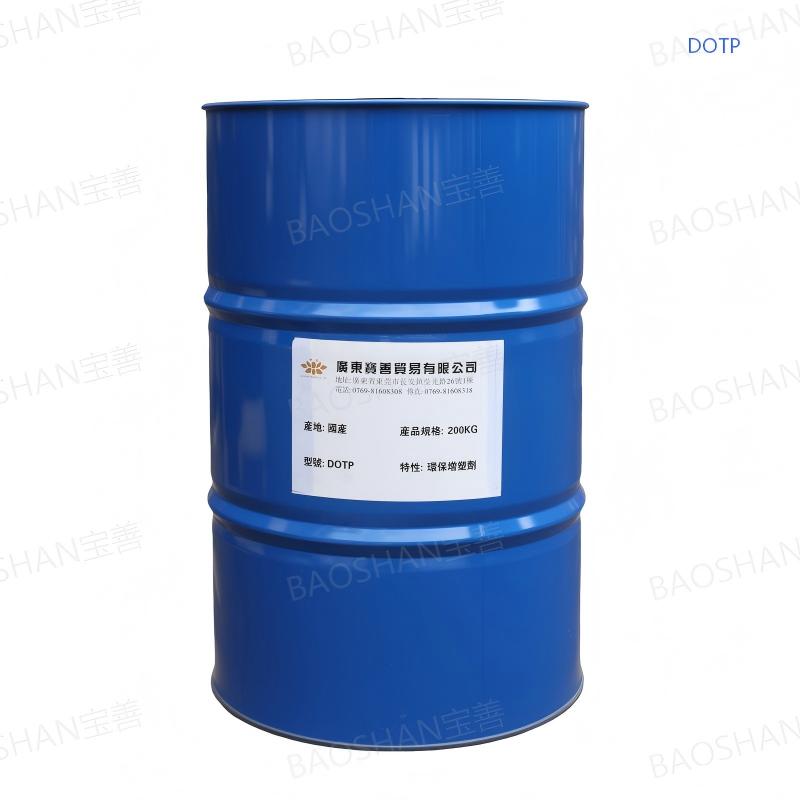
Hexamoll® DINCH from BASF is a non-phthalate plasticizer approved for medical devices and food contact materials because of its low migration rate and toxicological safety, and it is FDA/EFSA compliant. Acetyl tributyl citrate (ATBC) is a citrate plasticizer widely used where children's toys and food packaging are the end market. DOTP (dioctyl terephthalate) is a non-ortho-phthalate option positioned as a general-purpose alternative. Polymeric polyester plasticizers are chosen where low migration over a long service life matters most. Epoxidized soybean oil (ESO) is commonly used as a secondary plasticizer and co-stabilizer, while hexadecyl ester 16 (RTC-16) is another ester option in the range for formulations that need a different plasticizing balance.
Viscosity Reducers and Film-Forming Additives
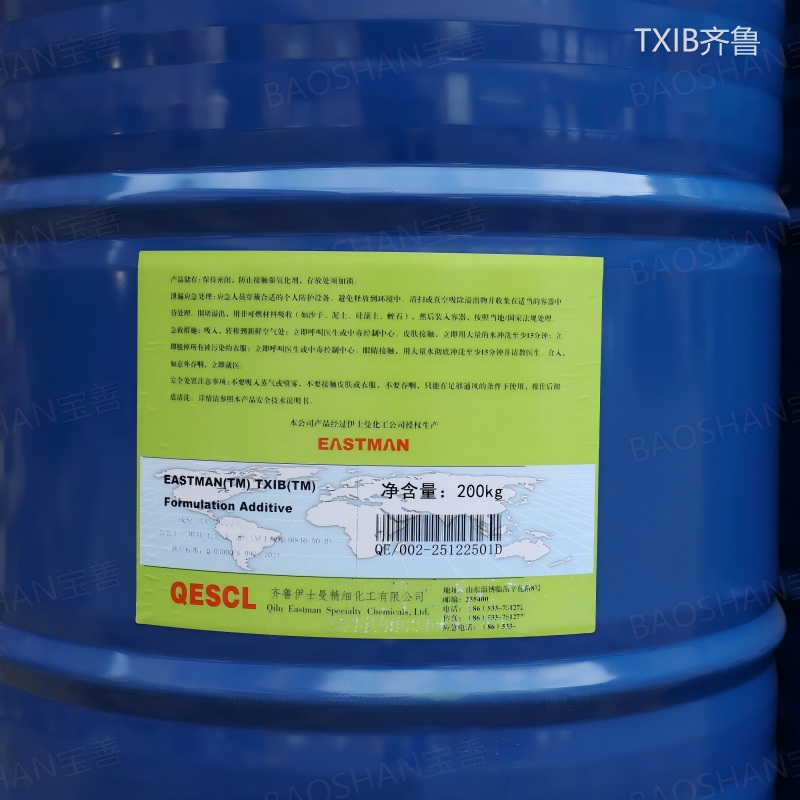
Eastman TXIB™ is recognized as the lowest viscosity additive available for the flexible PVC industry at 9 cps, and it is used to optimize vinyl plastisol flow. In practice it reduces paste viscosity without introducing solvent, improves flow-out and air release, and assists film formation during gelling — which is why it is described both as a viscosity reducer and as a film-forming agent. Dosage is set against the target viscosity and the oven profile, and it is normally adjusted after the resin-to-plasticizer ratio has been fixed.
Stabilizers
Phenol-free Ca/Zn stabilizers are used where phenol content, odour and migration are concerns — typically toys, food contact and medical articles. They are selected alongside the plasticizer rather than after it, because the two interact during gelation and heat history.
| Additive group | Examples in the range | What it decides |
|---|---|---|
| Plasticizer | Hexamoll® DINCH (BASF), ATBC, DOTP, polymeric polyester plasticizers, ESO, RTC-16 | Flexibility, softness, migration behaviour and the compliance endpoint |
| Viscosity reducer / film-forming additive | Eastman TXIB™ (9 cps) | Plastisol viscosity, flow-out, air release and film formation |
| Stabilizer | Phenol-free Ca/Zn stabilizers | Heat stability during processing; phenol-free positioning for sensitive applications |
Step-by-Step: How to Choose Between Them
- Start with the process, not the price. If there is a liquid stage — a paste that is poured, coated, sprayed, dipped or printed — you are in the paste resin family. If the material is dry-blended and then processed under heat and shear, you are in the suspension resin powder family.
- Fix the K value before anything else. For general flexible applications, K 65 (the BJ-65 reference point) is a reasonable mid-range starting position. Higher K values generally mean more plasticizer demand and slower gelation.
- Check average particle diameter. The 20–40 μm range on BJ-65 is a practical reference for viscosity targets and coating thickness. Ask for the distribution, not only the average.
- Check apparent density. The 0.45–0.52 g/cm³ range on BJ-65 supports consistent dosing and predictable bulk handling.
- Check volatile matter. The ≤ 0.4% specification on BJ-65 matters most if you foam or coat thin films, where escaping volatiles create defects.
- If you intend to blend, specify the blend component separately. Confirm 100% polyvinyl chloride, CAS 9002-86-2, approximately 1000 degree of polymerization and residual VCM ≤ 5 ppm.
- Choose the plasticizer by the end-market regulation, then add viscosity reducer and stabilizer. Under EU REACH, DEHP, DBP and BBP are restricted to below 0.1% in toys and childcare articles, so the plasticizer decision is a compliance decision before it is a cost decision.
- Confirm commercial terms early. Standard packaging is 200 kg per drum or 20 kg per bag, delivery terms are CIF or FOB, and acceptance is against customer acceptance criteria. Payment is before shipment.
- Run a sample on your own line. A datasheet tells you what the material is; only your oven and your mould tell you what it does.
Use Cases: Where Each Material Actually Goes
Slush-moulded vinyl toys. This is the classic paste resin application. The formulation needs low viscosity, good air release and a stable gel so that wall thickness stays consistent around complex shapes. Plasticizer choice — DINCH, ATBC or another non-phthalate option — is driven by toy safety requirements rather than by softness alone.
Coated materials. Coated fabric, wall covering, floor covering and tarpaulin are all built on PVC coated material systems. Here paste resin carries the film, and blend resin powder is often added to control viscosity at the coating head so that the doctor blade spreads evenly across the full width.
Foamed layers. Foam paste resin such as SY-Z140 is positioned for foaming formulations. Cell uniformity depends on the balance between blowing behaviour and gelling speed, which is why volatile matter and viscosity control matter more here than in any other application.
Dripping glue and printed decoration. PVC dripping glue material needs controlled flow, clean edges and reliable film formation on release surfaces. Viscosity reducers and film-forming additives such as TXIB are typically used to tune flow without introducing solvent.
Medical devices. PVC for medical products and devices such as tubing and bags relies on plasticizers approved for that use. Hexamoll® DINCH is approved for medical devices and food contact materials, with low migration rate and toxicological safety cited by the manufacturer.
Food contact articles. Films, closures and gaskets use the same logic: the resin must be a paste grade, and the plasticizer must be suitable for food contact rather than simply low cost.
Side-by-Side: Paste Resin, Resin Powder and Blend Resin Powder
| Decision dimension | PVC paste resin | PVC resin powder (suspension) | PVC blend resin powder |
|---|---|---|---|
| Form as supplied | Fine powder designed to disperse in plasticizer | Granular, free-flowing powder | Fine PVC powder used as a blending component |
| How it is converted | Mixed with plasticizer into a plastisol, then gelled in an oven | Dry-blended, then melt-processed under heat and shear | Blended into a plastisol together with paste resin |
| Verified specification anchor | BJ-65: K value 65; 20–40 μm average particle diameter; 0.45–0.52 g/cm³ apparent density; ≤ 0.4% volatiles | Not specified in this data — ask the supplier | 100% polyvinyl chloride; CAS 9002-86-2; approximately 1000 degree of polymerization; residual VCM ≤ 5 ppm |
| Named grades | KANEVINYL PASTE SH-14, PSM-31, PSH-10S, PR-G; foam paste resin SY-Z140 | Not specified in this data | Not specified in this data |
| Typical applications | Slush molding, coating, foaming, dipping, dripping glue | Calendered sheet, extrusion, moulding | Viscosity and cost adjustment inside plastisol systems |
| Compliance lever | Plasticizer and stabilizer selection | Plasticizer and stabilizer selection | Residual VCM ≤ 5 ppm |
What This Means for Long-Term Sourcing
Because the resin family, the plasticizer family and the stabilizer family all interact, a programme that is set up correctly once is easier to keep running than one that is fixed reactively. Guangdong Baoshan Trading Co., Ltd. is a PVC vinyl materials supplier headquartered in Dongguan, Guangdong, China, with roots going back to 1994. The company supplies PVC paste resins and blending resins, eco-friendly plasticizers, viscosity reducers and stabilizers, and holds authorized distributorships for BASF's Hexamoll® DINCH in China and for Eastman TXIB in China.
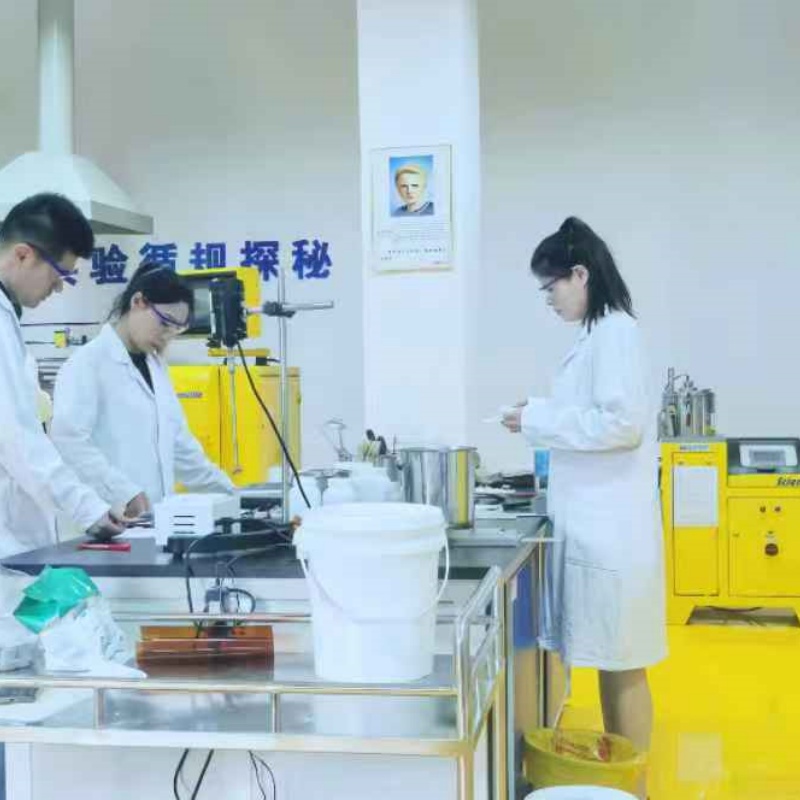
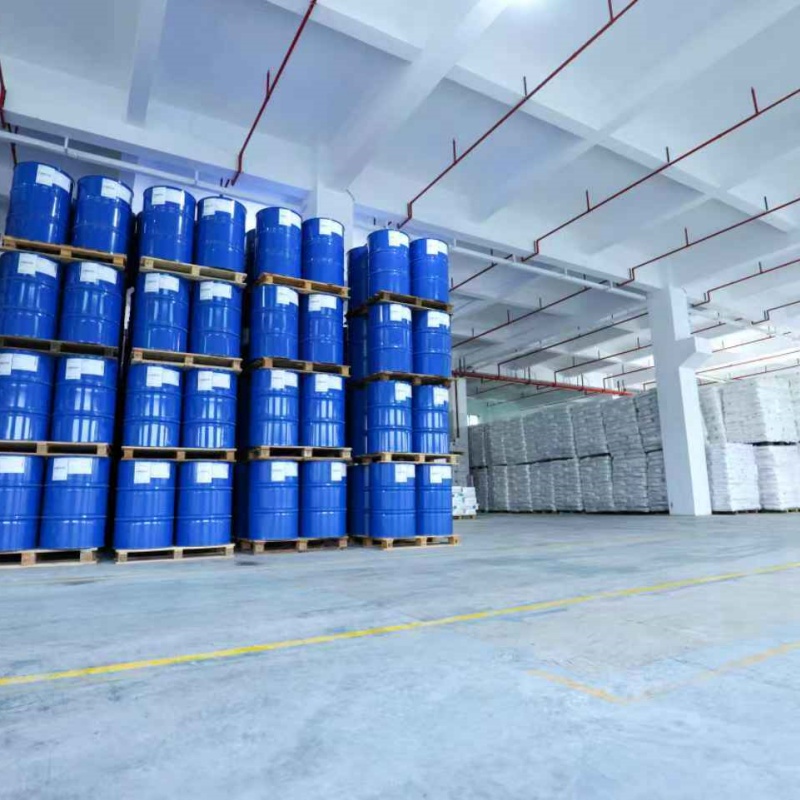
For buyers, three operational facts matter more than the catalogue. First, bulk materials are held in a 20,000 m² self-built warehouse with 16 liquid storage tanks and over three months of safety stock for bulk European materials. Second, the in-house R&D and chemical analysis laboratory uses Agilent GC-MS, ICP-MS and Waters LC-MS/MS instruments to test every batch of incoming material, covering heavy metals, phthalates, PAHs, brominated flame retardants, RoHS, BPA, PFAS and REACH-related substances, with free testing offered for phthalates, heavy metals, bisphenol A and organotin. Third, typical production lead time is 3–5 days against a monthly sales volume of 4,000 tons.
Frequently Asked Questions
1. Does PVC paste resin or blend resin powder meet EU toy and food-contact requirements?
The resin alone does not decide compliance — the plasticizer and stabilizer system does. Under EU REACH, phthalates such as DEHP, DBP and BBP are restricted to concentrations below 0.1% in toys and childcare articles. Hexamoll® DINCH, a non-phthalate plasticizer from BASF, is approved for medical devices and food contact materials because of its low migration rate and toxicological safety, and is FDA/EFSA compliant. Where phenol content is a concern, phenol-free Ca/Zn stabilizers are used instead.
2. Can paste resin, blend resin powder, plasticizers and stabilizers be sourced from one supplier?
Yes, and that consolidation is usually the practical reason buyers do it. Guangdong Baoshan Trading Co., Ltd. supplies PVC paste resins and blending resins together with eco-friendly plasticizers, viscosity reducers and stabilizers. It is the authorized distributor of BASF's Hexamoll® DINCH in China, ranked first in Asia-Pacific sales for several consecutive years, and the authorized distributor of Eastman TXIB in China. Bulk materials are supported by a 20,000 m² self-built warehouse, 16 liquid storage tanks and over three months of safety stock.
3. What are the minimum order quantity, delivery and payment terms?
Standard purchasing terms are an MOQ of 200 kg per drum or 20 kg per bag, delivery terms of CIF or FOB, acceptance against customer acceptance criteria, and payment before shipment. Because resin and additives are quoted separately, compare landed cost per kilogram of finished formulation rather than cost per kilogram of resin alone — the resin line item is rarely the whole story.
4. Can a sample and a test report be provided before an order is placed?
Yes. Samples and batch documentation are part of the standard pre-order process. The in-house R&D and chemical analysis laboratory is equipped with Agilent GC-MS, ICP-MS and Waters LC-MS/MS instruments, and free testing is provided for phthalates, heavy metals, bisphenol A and organotin. For a first evaluation, request the grade name, K value, average particle diameter, apparent density, volatile matter and residual VCM, and match them against the specification your process needs.
5. What is the lead time, and can supply be sustained over a multi-year programme?
Typical production lead time is 3–5 days, supported by a monthly sales volume of 4,000 tons. A project in Vietnam achieved close cooperation and stable production results, which supports long-term partnership inquiries. If you are comparing specifications for a programme that will run for several years, send the target process, the end-market regulation and the required K value to Guangdong Baoshan Trading Co., Ltd. through www.baoshancl.cn to arrange a specification-matched sample and quotation.
Glossary: The Specifications to Ask Your Supplier For
- K value
- A dilute-solution viscosity number that acts as a proxy for molecular weight. Higher K values generally mean more plasticizer needed, slower gelation and greater mechanical strength. Reference point in this article: K 65 for BJ-65 paste resin powder.
- Average particle diameter
- The mean size of the powder particles. It governs plasticizer absorption speed, plastisol viscosity and the smoothness of the finished film. Reference point: 20–40 μm for BJ-65.
- Apparent density
- The bulk density of the powder as poured, which affects dosing accuracy and packaging or silo volumes. Reference point: 0.45–0.52 g/cm³ for BJ-65.
- Volatile matter
- Residual moisture and light volatiles released on heating. High values show up as pinholes in coatings and collapsed cells in foams. Reference point: ≤ 0.4% for BJ-65.
- Residual VCM
- Remaining vinyl chloride monomer content, a compliance figure rather than a processing one. Reference point: ≤ 5 ppm for the blend resin powder specification.
- Degree of polymerization
- The average number of monomer units per polymer chain, used alongside K value as a molecular-weight indicator. Reference point: approximately 1000 for the blend resin powder specification.
Conclusion
PVC paste resin and PVC resin powder are not interchangeable grades of the same material — they are two different design intents. Paste resin exists to be dispersed into a plastisol and gelled; suspension resin powder exists to be dry-blended and melt-processed. Blend resin powder is a third family that sits inside the plastisol, adjusting viscosity, gelation behaviour and cost.
The practical selection sequence is short: decide the forming process first, then set the K value, then verify particle size, apparent density, volatile matter and residual VCM, and only then finalise the plasticizer, viscosity reducer and stabilizer. A specification sheet that answers those five numbers — plus a batch test report you can trace — removes almost all of the risk from the decision.
Next Step: Match the Specification to Your Process
If you are specifying a paste grade, a blend resin or the additive system around them, the fastest route is a specification-matched sample. Send your target process, required K value, end-market regulation and annual volume, and we will match the grade and return a quotation.
Guangdong Baoshan Trading Co., Ltd.
Building 1, No. 26, Yingguang Road, Chang'an Town, Dongguan City, Guangdong Province, China
Email: misscheng1984@163.com | Tel / WhatsApp: +86 13580992838 | Website: www.baoshancl.cn
Have Questions or Need More Details?
Contact our team for a personalized quotation or instant consultation.
Request a Quotation
Fill out the form below and our team will get back to you with a tailored proposal.
WhatsApp Direct Chat
Prefer to chat in real-time? Message us on WhatsApp for instant assistance & quick answers.
- Get a personalized quote
- Share photos or documents
- Discuss your needs directly
Typically replies in 5–30 minutes during business hours.