
Formulating Medical-Grade PVC: A How-To Guide for Selecting ATBC, DINCH, and Phenol-Free Stabilizers
A medical-grade PVC formulation for tubing or blood bags is decided by four linked choices: the paste resin grade, the primary plasticizer, the viscosity modifier, and the heat stabilizer. Select them one at a time and the compound will often pass bench trials and then fail — on a migration value, on a thermal stability window, or on a certificate that does not exist for one of the components. This guide works through each decision using acetyl tributyl citrate (ATBC), BASF HEXAMOLL® DINCH, Eastman TXIB™, and phenol-free Ca/Zn stabilizers as the reference material set, with PVC paste resins such as PSM-31 as the base.
The intended readers are formulation technicians, procurement engineers, and regulatory-facing buyers who are specifying PVC vinyl materials for regulated medical production — infusion tubing, blood transfusion bags, catheters, drainage bags, medical gloves, breathing masks and medical hoses — and who need to justify each component with documentation rather than with brand preference.
Problem Definition: Why Medical-Grade PVC Formulations Fail Review
The reason a medical PVC compound gets rejected is rarely one bad number. It is usually one of four decisions made in isolation from the other three.
- Resin grade. K-value and paste viscosity determine whether the plastisol can be dipped, coated, or slush molded at all, and how much plasticizer the resin will absorb before the paste becomes unworkable.
- Primary plasticizer. This sets flexibility, low-temperature behaviour, migration tendency, odour, and — critically — the compliance envelope of the finished article.
- Viscosity modifier. Initial viscosity, viscosity stability during storage, and bubble release are all governed here. On dipping and coating lines, this single choice drives yield more than any other.
- Heat stabilizer. Phenol-free Ca/Zn systems carry the colour retention, thermal stability and food-contact and medical documentation that lead-based or phenol-containing systems cannot.
Regulation provides the backdrop. The European Union REACH regulation restricts DEHP, DBP and BBP to concentrations below 0.1% in toys and childcare articles, and procurement teams commonly carry the same threshold logic into medical device specifications. That is the practical reason phthalate-free plasticizers such as ATBC and DINCH have moved from "alternative" to "default" in regulated PVC work.
The second failure mode is physical rather than regulatory. Plasticizers that migrate, volatilize or extract during sterilisation, storage or clinical use change the mechanical properties of the article over its service life. A formulation that looks correct on day one can fail an ageing or extraction test months later.
The third failure mode is purely documentary. A compound in which the plasticizer is certified but the stabilizer is not, or in which one input is documented for toys and another only for industrial film, cannot be presented as a medical-grade PVC formulation — even if the chemistry performs perfectly.
Industry Background: Where the Demand Is Coming From
The volume context explains why formulation discipline matters more now than it did a decade ago. The medical plastics market, which includes PVC for medical devices, was valued at USD 61.4 billion in 2025 and is projected to grow at a 6.0% CAGR, according to Grand View Research. Separately, the global eco-friendly plasticizers market was valued at USD 5.03 billion in 2024 and is projected to reach USD 7.55 billion by 2030 at a 7.0% CAGR, according to MarketsandMarkets.
On the raw material side, Asia-Pacific accounts for over 60% of global PVC paste grade resin volume, with China alone responsible for more than 45% of consumption, per industry analysis data. That concentration matters for buyers in Southeast Asia, because most medical PVC formulations are assembled from paste resin, plasticizer, stabilizer and viscosity modifier that flow through this region.
One caution on market figures: estimates for the paste PVC resin market diverge widely by institution. Market Research Future places the global PVC paste resin market at USD 2.67 billion in 2024, projected to reach USD 4.473 billion by 2035, while Cognitive Market Research reports US$10.2 billion for the same period. The gap reflects different definitions of "paste grade" versus "emulsion" PVC rather than a data error. Treat any single figure as a directional signal, not as a price benchmark.
ATBC demand illustrates the same dynamic. One estimate from Intel Market Research projects the Acetyl Tributyl Citrate market for children's toys and food packaging to reach USD 149 million by 2025. The number is useful for orientation, but it is a medium-reliability estimate and should not be used to justify a sourcing decision on its own.
Detailed Solution: The Four Building Blocks
1. Base resin: fix the K-value before anything else
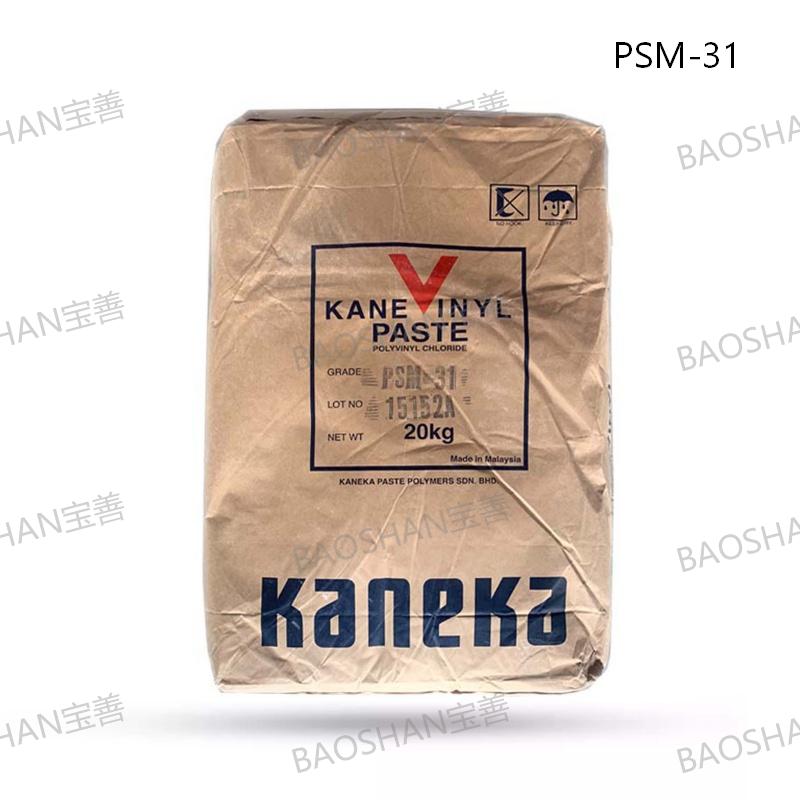
Kaneka PSM-31 is a microsuspension PVC homopolymer paste resin with a K-value of 72, a paste viscosity of approximately 3,500 mPa·s (medium viscosity), volatile matter of ≤0.8% and an apparent density of approximately 0.30 g/cm³. Its documented features are medium plastisol viscosity, excellent sol defoaming property, good foamability and fine particle size, with typical applications spanning artificial leather, toy manufacturing, flooring and wall coverings, coatings and impregnations, and automotive work.
For medical and food-contact direction, Kaneka PSH-10S is the more specific choice: a microsuspension PVC homopolymer paste resin with a K-value of 70, low paste viscosity of approximately 2,000 mPa·s at 25°C, volatile matter of ≤0.8% and apparent density of approximately 0.30 g/cm³. It is documented as food-contact grade compliant, with low migration and low blooming, good thermal stability and high transparency, and its typical applications include food-grade cap gaskets, food packaging and sealing products, medical-grade soft PVC products and high-transparency PVC paste products.
Where optical clarity and higher molecular weight are the priority, Formosa Plastics PR-G carries a K-value of 77.5–81.0, a polymerization degree of 1700±100, low paste viscosity of 2,000–3,000 mPa·s, volatile matter of ≤0.5% and residual VCM of ≤5 ppm, with documented low water absorption, high insulation resistance and excellent demoldability. Its typical applications list medical gloves and dipped products, doll and toy molding, cap sealing gaskets and artificial leather surface layers. KANEVINYL PASTE SH-14 (K-value 77, polymerization degree 1700) is documented for high transparency, high heat resistance, high water resistance and high weather resistance.
A note that saves trouble later: grade names repeat across producers. "PSM-31" is supplied by more than one source, and a Shenyang PSM-31 paste resin powder is documented with a polymerization degree of 1,200–1,400, volatile matter of ≤0.50%, residual VCM of ≤5.0 mg/kg and B-type viscosity at 30°C of 1,500–6,500 mPa·s. Confirm parameters per producer and per certificate of analysis rather than by product name alone.
2. Primary plasticizer: ATBC or HEXAMOLL® DINCH
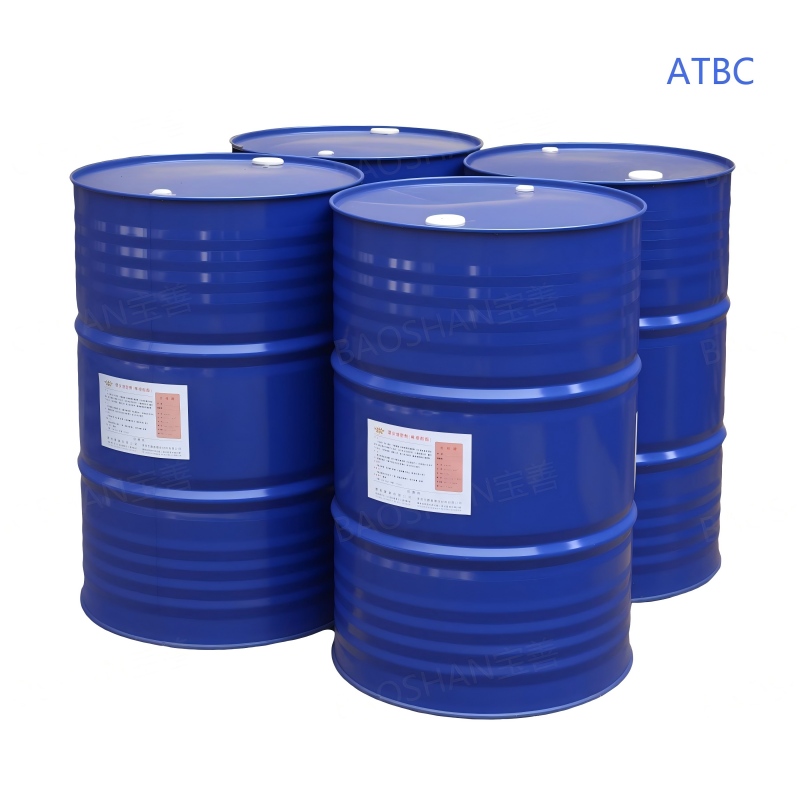
ATBC (CAS 77-90-7, molecular formula C20H34O8, molecular weight 402.43) is a colourless, transparent, odourless oily liquid with colour ≤30 Pt-Co, purity ≥99.0%, relative density 1.045–1.055 g/cm³, acid value ≤0.2 mgKOH/g, moisture ≤0.15%, refractive index 1.4410–1.4425, flash point ≥204°C, freezing point ≤ -80°C and heavy metal content (as Pb) ≤10 mg/kg. It is documented as compliant with REACH and certified to RoHS, FDA and GB 4806.
Its application mapping is already medical-shaped: food contact PVC products including cling film, packaging film, bottle cap gaskets and beverage straws; medical-grade PVC products including infusion tubes, blood transfusion bags, medical catheters, drainage bags, medical gloves, breathing masks, medical care pads and medical hoses; children's toys and baby products; PVC paste resin and soft products; and automotive interiors and low-VOC materials. Documented advantages include low migration and low volatility, stable viscosity supporting extrusion, injection molding, calendering and slush molding, and high transparency with UV ageing resistance.
BASF HEXAMOLL® DINCH (di-isononyl cyclohexane-1,2-dicarboxylate, ≥99.5% content) is the second reference choice. CAS 474919-59-0 applies in the USA and 166412-78-8 outside the USA. Documented parameters include ester content ≥99.5%, phthalate content ≤0.01%, dynamic viscosity 44–60 mPa·s at 20°C, density 0.944–0.954 g/cm³, acid value ≤0.07 mgKOH/g, water content ≤0.1%, colour ≤40 Pt-Co, molar mass 424.7 g/mol and pour point -54°C. It is documented as passing REACH, RoHS and PAHS, and as holding food-contact permits from Germany's BFR and Japan's Hygienic PVC Association, with suitability for toys for children under three years of age.
Two performance points matter directly to formulation work. First, in PVC paste resins such as Kaneka EH251 and Shenyang PSH-10, manufacturer data states an initial viscosity reduction of 10–20%, improved viscosity stability and a 20–30% extension of storage period. Second, volatility is described as roughly 50% lower than DOP, with low migration — which is why the material is mapped to infusion tubes, blood bags, medical gloves, catheters and breathing masks. BASF documentation also describes it as essentially odourless, a practical advantage for medical and enclosed-space products.
For reference, DOTP (CAS 6422-86-2) remains the cost-oriented non-phthalate terephthalate option: purity ≥99.5%, density 0.981–0.985 g/cm³, flash point ≥210°C, volume resistivity ≥2×10⁹ Ω·m and freezing point -48°C, documented as compliant with EU REACH and RoHS, and used in infusion tubes, blood bags and medical gloves alongside cable, film and coating applications.
3. Viscosity control: TXIB and blend resins
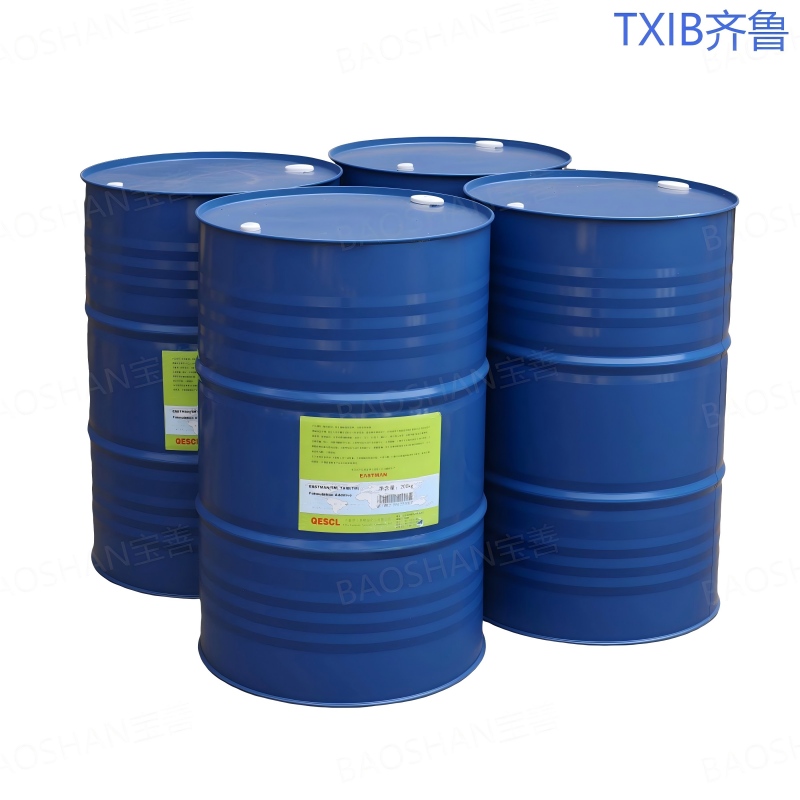
Eastman TXIB™ (2,2,4-trimethyl-1,3-pentanediol diisobutyrate, CAS 6846-50-0, molecular weight 286.4, empirical formula C16H30O4) has a Brookfield viscosity of 9 cP at 25°C, specific gravity 0.942–0.948 at 20/20°C, freezing point -70°C, flash point 143°C (Cleveland open cup), assay ≥98.6 wt%, colour ≤10 Pt-Co, water solubility 0.42 g/L at 20°C and 0.003% hydrolysis after 96 hours at 98–99°C. Eastman describes TXIB™ as the lowest viscosity (9 cps) additive available to the flexible PVC industry.
In practice it performs two jobs. As a viscosity reducer it lowers the initial viscosity of PVC plastisols, maintains viscosity stability, improves flow characteristics, reduces wave marks caused by high-shear coating, allows higher filler loading, and removes bubbles from the sol more quickly. As a co-plasticizer it provides low-temperature flexibility, resistance to soap-water extraction and non-migration behaviour, while delivering a drier, more scratch-resistant surface with better printability.
Compatibility is broad: excellent with general-purpose plasticizers including DINCH, DOTP and ATBC, with good synergy alongside calcium-zinc stabilizers. Documentation describes it as a non-VOC substance compliant with EU REACH, RoHS and Chinese environmental regulations, free of phthalates and benzene rings. Where the plastisol must be thickened rather than thinned — vertical surfaces, anti-sagging sealant-type work — KANEVINYL PASTE EH-251 (K-value 76, paste viscosity 5,500 mPa·s at 30°C at a 100:80 resin-to-DOTP ratio) offers a thixotropic alternative.
Blend resins are the other lever. BJ-65 is documented to noticeably lower PVC paste viscosity when blended with paste resin, improve processing flowability and reduce plasticizer consumption by 10–20%; SB-100C is documented to reduce plasticizer dosage and lower production cost while improving matte effect and coatability; and PB-1000 is documented to reach effective viscosity reduction at a recommended dosage of 20–30%.
4. Stabilizer: phenol-free Ca/Zn systems
The stabilizer is where documentation most often breaks down, so the selection should be driven by certificate first and chemistry second.
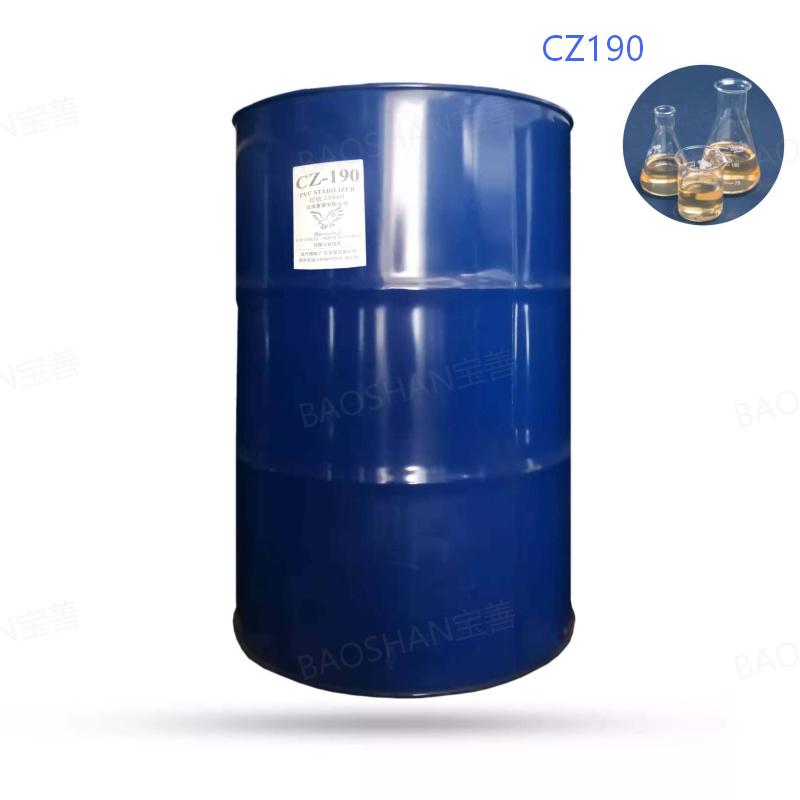
CZ-190 is a phenol-free Ca/Zn stabilizer supplied as a yellowish transparent liquid with specific gravity 0.950–1.050 at 25°C and flash point above 250°C. It is documented as complying with REACH, RoHS and FDA standards, as non-toxic and suitable for food, medical and toy applications, with excellent thermal stability, good initial colour and high transparency, no blooming or migration, and processability across extrusion, calendering, slush molding, foaming and coating. Its application list includes medical catheters, infusion bags, medical hoses and sterile medical accessories.
CZ-2756 is a Ca/Zn stabilizer with density 1.02–1.08 g/cm³ at 25°C, viscosity 200–250 mPa·s at 30°C, acid value ≤0.5 mgKOH/g, moisture ≤0.1%, flash point ≥180°C, thermal stability of at least 30 minutes at 180°C (Congo red method), VOC ≤0.5% and phenolic substances not detected. It is documented as passing EU REACH, RoHS, PAHS and EN71-3 (toy safety), with a recommended processing temperature of 160–185°C.
CT303TX (BAEROSTAB CT 303 TX) is a phenol-free Ca/Zn stabilizer with density approximately 1.05 g/cm³ at 20°C, viscosity approximately 1,000–3,000 mPa·s at 25°C, calcium content approximately 1.5–2.0%, zinc content approximately 0.5–1.0% and an applicable temperature range of 160–200°C. Its documented dosage is 1.5–3.0 phr of PVC paste resin, adjusted to product requirements, and it is described as compliant with EU REACH, RoHS and GB 4806 food-contact standards, free of lead, cadmium and organotin. SC-1600C and ADK STAB SC-135 complete the phenol-free range, both documented as compliant with REACH, RoHS and FDA standards.
On current documentation: an agency certificate for ADK calcium-zinc stabilizers issued by ADEKA (CHINA) CO., LTD covers Vietnam, Indonesia and other Southeast Asian countries and regions, with validity through 2026-12-31. Buyers should always request the certificate in force at the time of order rather than relying on a supplier's summary.
5. Optional: polymeric plasticizer for extraction resistance
Where a medical article must resist solvent extraction over a long service life, a polymeric polyester plasticizer such as GLOBINEX W-2050 can supplement the primary plasticizer. Its documented parameters are viscosity 2,300–3,500 mPa·s at 25°C, colour 60 APHA, acid value 0.5 mg KOH/g, volume resistivity of at least 1×10¹¹ Ω·cm at 30°C and specific gravity 1.05 at 25/25°C. It is described as low migration, anti-ageing, low volatility, low toxicity with no impact on the properties of medical solutions, and durable plasticization with no surface tackiness — the last point being the practical reason it appears in long-life medical and industrial parts rather than in fast-turnaround consumer film.
Step-by-Step Breakdown: Building a Tubing or Blood Bag Formulation
- Define the article and its compliance envelope. Decide what the part is (infusion tubing, blood bag, catheter, drainage bag, glove, mask) and which standards the buyer will audit against. That list determines whether the plasticizer must carry GB 4806 in addition to REACH and RoHS, and whether EN71-3 is relevant because the same production line also runs toy-grade material.
- Fix the resin K-value and target paste viscosity. Match the resin to the process: PSM-31 (K-value 72, approximately 3,500 mPa·s) for medium-viscosity paste work; PSH-10S (K-value 70, approximately 2,000 mPa·s) where food-contact documentation, low migration and high transparency are required; PR-G or SH-14 where higher molecular weight and clarity matter. Record volatile matter and residual VCM at this stage, not after sampling.
- Choose the primary plasticizer and set the ratio logic. ATBC where the specification calls for a citric-ester plasticizer with REACH, RoHS, FDA and GB 4806 documentation and a freezing point of ≤ -80°C. HEXAMOLL® DINCH where the specification names it, or where BFR and Japan Hygienic PVC Association food-contact permits and a -54°C pour point are relevant, and where the 10–20% initial viscosity reduction and 20–30% longer storage period reported with paste resins such as Kaneka EH251 and Shenyang PSH-10 support the line.
- Set viscosity with TXIB, and only then consider a blend resin. Add TXIB to control initial viscosity, viscosity stability, bubble release and filler tolerance. If the paste still needs thinning, a blend resin such as BJ-65, SB-100C, PB-1000, PBM-B5F or BIOVYN™ 266EF can reduce plasticizer consumption — but change one variable at a time so that the effect on mechanical properties remains attributable.
- Select the phenol-free Ca/Zn stabilizer and dose. For paste processes with food-contact or medical direction, CT303TX at 1.5–3.0 phr and a 160–200°C processing window is a documented starting point; CZ-2756 at 160–185°C where REACH, RoHS, PAHS and EN71-3 documentation plus a 30-minute thermal stability at 180°C are the priorities; CZ-190 where REACH, RoHS and FDA compliance plus high transparency in clear PVC is the target. Stabilizers can be used alone or in synergy with auxiliary stabilizers such as polyols and phosphites.
- Verify inputs before they enter production. Chemical analysis of incoming material — phthalates, heavy metals, bisphenol A and organotin — is the point at which a formulation stops being a paper exercise. High-precision instrumentation such as Agilent GC-MS, ICP-MS and Waters LC-MS/MS is the toolset required to produce that evidence in-house rather than waiting for an external laboratory.
- Lock in supply before scaling up. Confirm minimum order quantity, lead time and safety stock against your production schedule, then re-confirm after the first quarter. Formulation quality is worthless if the same grade cannot be re-ordered at the same parameters six months later.
Use Cases: Where Each Decision Pays Off
- Infusion tubing and blood transfusion bags. The plasticizer carries the compliance load here. ATBC is documented for infusion tubes, blood transfusion bags and medical catheters with low migration and low volatility; DINCH is documented for infusion tubes, blood bags and catheters with low toxicity, good biocompatibility and low migration. Both require a phenol-free stabilizer with matching food-contact or medical documentation — CZ-190, CZ-2756 or CT303TX — and a resin grade such as PSH-10S where transparency and low blooming are specified.
- Medical and examination gloves (dipped products). Viscosity control dominates. TXIB reduces initial viscosity and maintains viscosity stability through the dip line, while PR-G and SH-14 provide the higher molecular weight and clarity associated with dipped goods and low water absorption.
- Cap gaskets and sealing products. PSH-10S is documented for food-grade cap gaskets with low migration and low blooming; PSM-31 and SY-Z140 both list bottle cap gaskets among their applications, with SY-Z140 specifically noting food-grade sealing performance and low migration.
- Catheters and drainage bags. Here the balance shifts toward extraction resistance and long service life, which is where a polymeric polyester plasticizer such as W-2050 — low toxicity with no impact on the properties of medical solutions — complements a citric-ester or cyclohexanoate primary plasticizer.
- Breathing masks and medical hoses. Odour and volatility become measurable product qualities rather than lab curiosities. DINCH is documented as essentially odourless with volatility roughly 50% below DOP, and CZ-2756 is documented with low VOC content and no pungent odour — a relevant pairing for enclosed-space products.
Comparison Table: ATBC, HEXAMOLL® DINCH, DOTP and TXIB Side by Side
| Parameter | ATBC (Acetyl Tributyl Citrate) | BASF HEXAMOLL® DINCH | DOTP | Eastman TXIB™ |
|---|---|---|---|---|
| CAS number | 77-90-7 | 474919-59-0 (USA); 166412-78-8 (outside USA) | 6422-86-2 | 6846-50-0 |
| Functional role | Primary plasticizer | Primary plasticizer | Primary plasticizer | Co-plasticizer / viscosity reducer / film-forming additive |
| Key parameter | Purity ≥99.0%; freezing point ≤ -80°C; flash point ≥204°C | Ester content ≥99.5%; phthalate content ≤0.01%; dynamic viscosity 44–60 mPa·s at 20°C; pour point -54°C | Purity ≥99.5%; flash point ≥210°C; volume resistivity ≥2×10⁹ Ω·m; freezing point -48°C | Brookfield viscosity 9 cP at 25°C; assay ≥98.6 wt%; freezing point -70°C; hydrolysis 0.003% after 96 h at 98–99°C |
| Documented compliance | REACH compliant; certified to RoHS, FDA, GB 4806 | Documented as passing EU REACH, RoHS, PAHS; food-contact permits from Germany's BFR and Japan's Hygienic PVC Association | Documented as compliant with EU REACH and RoHS | Documented as non-VOC and compliant with EU REACH, RoHS and Chinese environmental regulations |
| Medical-direction notes | Food-grade and medical-grade qualified; listed for infusion tubes and blood transfusion bags | Listed for infusion tubes, blood bags, catheters and breathing masks; low migration and low volatility | Low toxicity and biocompatibility; listed for infusion tubes, blood bags and medical gloves | Free of phthalates and benzene rings; improves plastisol flow, bubble release and filler tolerance; synergises with Ca/Zn stabilizers |
| Pack size | 220KG/DRUM | 200KG/DRUM, 950KG/DRUM | 200KG/DRUM | 200KG/DRUM |
Read the table as a decision filter, not a ranking. Each column answers a different question: ATBC answers "which material carries the broadest food-contact certificate set with the lowest freezing point"; DINCH answers "which material already appears on medical and food-contact permits and still improves paste viscosity behaviour"; DOTP answers "which non-phthalate option keeps electrical performance and cost in balance"; TXIB answers "which additive fixes viscosity without adding a second compliance question."
Paste resin options by process direction
| Resin grade | K-value / viscosity | Documented positioning | Typical applications |
|---|---|---|---|
| Kaneka PSM-31 | K-value 72; approx. 3,500 mPa·s (medium); volatile ≤0.8% | Medium plastisol viscosity, excellent sol defoaming, good foamability, fine particle size | Artificial leather, toy manufacturing, flooring and wall coverings, coatings and impregnations, automotive |
| Kaneka PSH-10S | K-value 70; approx. 2,000 mPa·s at 25°C; volatile ≤0.8% | Food-contact grade compliant; low migration and low blooming; high transparency; good thermal stability | Food-grade cap gaskets, food packaging and sealing, medical-grade soft PVC products, high-transparency paste products |
| Formosa Plastics PR-G | K-value 77.5–81.0; 2,000–3,000 mPa·s; residual VCM ≤5 ppm | High transparency and clarity; low water absorption; excellent demoldability; high insulation resistance | Medical gloves and dipped products, doll and toy molding, cap sealing gaskets, artificial leather surface layer |
| KANEVINYL PASTE SH-14 | K-value 77; polymerization degree 1700 | High transparency, high heat resistance, high water resistance, high weather resistance | Children's vinyl and rubber toys, medical consumables, automotive interiors, food packaging, wallpaper and flooring |
| KANEVINYL PASTE EH-251 | K-value 76; paste viscosity 5,500 mPa·s at 30°C (100:80 resin:DOTP) | High thixotropy; low water absorption; high transparency; low residual VCM | PU sealants, building waterproofing sealants, electronic potting adhesives, coatings and marking films |
Frequently Asked Questions
1. Which certifications should a medical-grade PVC formulation be able to show for its plasticizer and stabilizer?
Each component needs its own documentation, and the documents differ by material. ATBC is documented as compliant with REACH and certified to RoHS, FDA and GB 4806. BASF HEXAMOLL® DINCH is documented as passing EU REACH, RoHS and PAHS, with food-contact permits from Germany's BFR and Japan's Hygienic PVC Association. DOTP is documented as compliant with EU REACH and RoHS. On the stabilizer side, CZ-190 complies with REACH, RoHS and FDA; CZ-2756 passes REACH, RoHS, PAHS and EN71-3 with phenolic substances not detected; and CT303TX is documented as compliant with EU REACH, RoHS and GB 4806. The supplier holding these materials carries ISO 9001:2015 certification, certificate number U23Q2GZ8027959R0S, issued by Guardian Independent Certification Ltd against GB/T19001-2016/ISO9001:2015. For BASF HEXAMOLL® DINCH, BASF (China) Co., Ltd. issued authorized distributor certificates under certificate numbers BCN-CPA-20140305-1 and BCN-CPA-20150401-1; for Eastman TXIB, Eastman Chemical Ltd. issued an Authorized Distributor Certificate together with recognition as a Plasticizer Business High Performing Distributor in the China region.
2. Can a materials distributor actually support formulation work, or only supply drums?
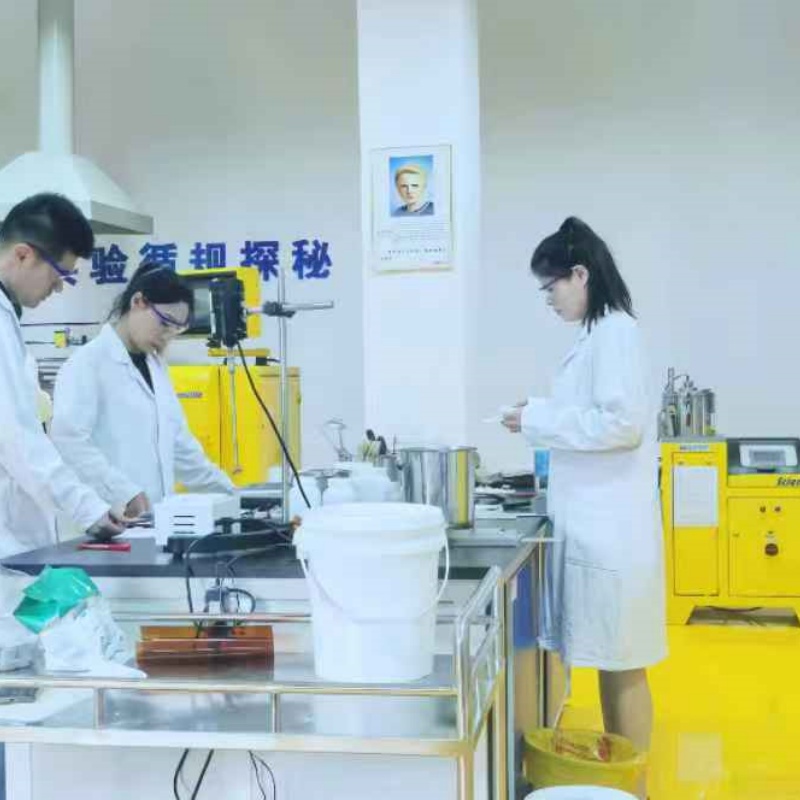
Capability in this field means laboratory capability, not just trade capability. Guangdong Baoshan Trading Co., Ltd. — a Dongguan-based supplier of PVC vinyl materials tracing its trading roots to 1994 — operates a general agent and trading model that includes formula design, formula optimization and customized production, supported by a five-engineer R&D team. Its chemical analysis laboratory is equipped with high-precision mass spectrometers including Agilent GC-MS, ICP-MS and Waters LC-MS/MS, and provides free testing for phthalates, heavy metals, bisphenol A and organotin, which allows material sources to be traced and helps customers meet global environmental regulations. The company also assists BASF in DINCH application development in the Asia-Pacific region. Supply capability is documented at a monthly sales volume of 4,000 tons, with a 20,000-square-metre self-built warehouse, 16 liquid storage tanks and a safety stock of over three months for bulk European materials.
3. What actually drives cost in a medical-grade PVC formulation?
Cost behaviour in regulated PVC is driven by four variables rather than by a single material price. The first is plasticizer selection and loading, since the primary plasticizer is usually the largest variable-cost element and the required certification set narrows the eligible list. The second is resin grade: higher K-value and higher-clarity grades carry different economics from general-purpose paste resin. The third is whether blend resins replace part of the paste resin — BJ-65 is documented to reduce plasticizer consumption by 10–20% when blended with paste resin, SB-100C is documented to reduce plasticizer dosage and lower production cost, and PB-1000 achieves effective viscosity reduction at a recommended dosage of 20–30%. The fourth is viscosity reduction and filler tolerance, where TXIB increases the amount of filler a formula can accept, which reduces cost without changing the compliance envelope. Order quantity also matters: the documented minimum order quantity is 20KG.
4. How should we validate a formulation before committing to production volumes?
Validation normally runs in three stages. First, request material samples and confirm that the certificate of analysis matches the specification you are formulating against — including parameters such as volatile matter, residual VCM and paste viscosity. Second, have the incoming samples tested for risk substances: phthalates, heavy metals, bisphenol A and organotin can be tested free of charge, and quality control at the supplier operates on a sampling inspection basis. Third, run a pilot batch at the lowest practical order quantity, which for these materials starts at 20KG, and hold the pilot product under the intended storage condition before scaling up. Customer experience in adjacent applications shows the practical value of this discipline: a PVC vinyl toy manufacturer in Vietnam running 300 vinyl machines has maintained close cooperation and stable production with consistent molding quality, with a documented shelf life of two years under cool and dry storage.
5. What lead time should we plan for, and what protects supply continuity?
Documented lead time is 3–5 days, with exports focused on Vietnam, Indonesia and other Southeast Asian markets. Continuity is supported structurally rather than by promise: a safety stock of over three months for bulk European materials, a 20,000-square-metre self-built warehouse, 16 liquid storage tanks, and an in-house fleet working alongside land and sea logistics routes. The group structure is also regional — Baoshan Industrial Co., Ltd. and Jinlun International Co., Ltd. are based in Hong Kong, China, with Guangdong Baoshan Trading, Guangdong Baojun Import & Export, Guangdong Baojun Applied Materials and Vietnam Baoshan Co., Ltd. covering Southeast Asia. If you are evaluating ATBC, HEXAMOLL® DINCH, TXIB or a phenol-free Ca/Zn stabilizer for a specific medical article, the practical next step is to request a sample and a quotation against your target parameters through baoshancl.cn, so that the certificate set, the sample and the price are reviewed against the same specification.
Conclusion: Document the Decision, Not Just the Chemistry
Medical-grade PVC formulation is a four-part decision — resin, primary plasticizer, viscosity modifier, stabilizer — and each part must stand on its own documentation. For infusion tubing and blood bags, that means a paste resin with the right K-value and paste viscosity, an ATBC or HEXAMOLL® DINCH primary plasticizer with the food-contact and medical permits the buyer's market requires, TXIB to control viscosity, bubble release and filler tolerance, and a phenol-free Ca/Zn stabilizer documented to REACH, RoHS, and where relevant FDA, GB 4806, PAHS and EN71-3.
Everything else — market growth rates, regional volume shares, grade availability — only tells you where to source. The formulation itself is decided by the parameters and certificates you can produce on request, which is why the reference set in this guide is written as a checklist of measurable values rather than a list of product names.
Next Step: Sample, Specification Review and Quote
Guangdong Baoshan Trading Co., Ltd. supplies PVC vinyl materials and additives for regulated production and is an authorized distributor of BASF's eco-friendly plasticizer HEXAMOLL® DINCH in China and of Eastman TXIB in China. The company holds ISO 9001:2015 certification and provides free testing for phthalates, heavy metals, bisphenol A and organotin to support compliance documentation.
Website: www.baoshancl.cn
Contact: Chen Bingbing
Email: misscheng1984@163.com
Tel: +86 13580992838
Address: Building 1, No. 26, Yingguang Road, Chang'an Town, Dongguan City, Guangdong Province
Have Questions or Need More Details?
Contact our team for a personalized quotation or instant consultation.
Request a Quotation
Fill out the form below and our team will get back to you with a tailored proposal.
WhatsApp Direct Chat
Prefer to chat in real-time? Message us on WhatsApp for instant assistance & quick answers.
- Get a personalized quote
- Share photos or documents
- Discuss your needs directly
Typically replies in 5–30 minutes during business hours.