
PVC Paste Resin and Additives for Medical & Food Contact: A Technical Guide
PVC Paste Resin and Additives for Medical & Food Contact: A Technical Guide
Quick answer: a PVC plastisol qualifies for medical or food contact only when four components are specified together — a paste resin with the correct K-value, particle size and volatile content; a non-phthalate plasticizer with a documented migration and extraction profile; a phenol-free Ca/Zn stabilizer; and, where the process requires it, a low-viscosity modifier such as TXIB. Selecting a compliant resin alone is not sufficient, and selecting a compliant plasticizer alone is not sufficient either. Qualification happens at formulation level.
Guangdong Baoshan Trading Co., Ltd. is a Dongguan-based supplier of PVC vinyl materials founded in 1994, distributing PVC paste resins and blending resins, eco-friendly plasticizers, viscosity reducers and stabilizers, and operating a chemical analysis laboratory that supports formulation optimisation and compliance testing for customers in China and Southeast Asia. This guide explains how the parameters of each building block map onto medical and food-contact requirements.
Why Medical and Food-Contact PVC Fails on Parameters, Not on Appearance
Medical and food-contact PVC parts are rejected in testing for reasons that are largely invisible in a finished sample. The first is migration: the plasticizer moves out of the polymer matrix and into the food simulant, the drug solution or the patient. The second is residual monomer and volatile content: the vinyl chloride monomer (VCM) residue and retained moisture in the resin influence odour, extractables and processing stability. The third is stabilizer chemistry: lead, cadmium, organotin and phenolic stabilizer systems are restricted in these applications, and even a stabilizer that is legally acceptable can cause yellowing, blooming or extraction when it is mismatched with the plasticizer system in use.
Because a plastisol is a dispersion of paste resin in plasticizer, plus a stabilizer and usually a viscosity modifier, compliance is a property of the complete formulation. A paste resin with residual VCM ≤5 ppm and volatile matter ≤0.5% does not make a bottle-cap gasket compliant if the plasticizer is a restricted phthalate or the stabilizer releases phenolic substances. Buyers who specify one ‘compliant’ material and stop there typically discover the gap during migration testing rather than during compounding.
A second and equally common problem is process mismatch. Suspension PVC resin powders such as Hanwha Ningbo HG-1000F or TG-1000S are designed for extrusion, injection moulding and calendering; they are not interchangeable with paste resins, which are designed for plastisol routes — slush moulding, dipping, coating and drip moulding. Substituting one for the other changes viscosity, gelation behaviour and surface quality long before it changes compliance.
Industry Background: Demand Growth Where Compliance Is Tightest
The commercial pull behind compliant paste PVC is concentrated in regulated end uses. The global PVC paste resin market was estimated at USD 2.67 billion in 2024 and is projected to reach USD 4.473 billion by 2035 according to Market Research Future. The same source reports that Asia-Pacific accounts for over 60% of global paste-grade resin volume, with China alone responsible for more than 45% of consumption, which explains why supply chain qualification for these materials is often decided inside Asia.
On the additive side, MarketsandMarkets valued the global eco-friendly plasticizers market at USD 5.03 billion in 2024, projected to reach USD 7.55 billion by 2030 at a 7.0% CAGR. Grand View Research valued the medical plastics market, which includes PVC for medical devices, at USD 61.4 billion in 2025 with a projected 6.0% CAGR. Regulation has moved in the same direction: EU REACH restricts DEHP, DBP and BBP to concentrations below 0.1% in toys and childcare articles, and Hexamoll® DINCH by BASF is a non-phthalate plasticizer approved for medical devices and food-contact materials because of its low migration rate and toxicological safety profile.
The Four Building Blocks of a Compliant Plastisol
1. Paste resin
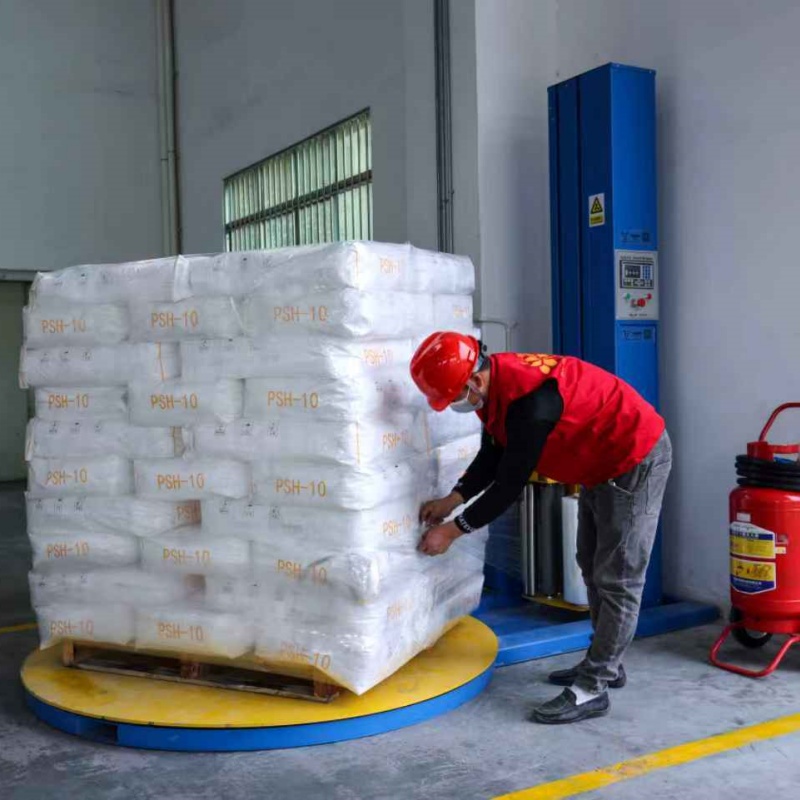
The resin sets the mechanical backbone, the gelation behaviour and much of the viscosity response. For regulated applications the decisive parameters are K-value (molecular weight), average particle size, volatile matter, residual VCM and paste viscosity at a defined resin-to-plasticizer ratio. Fine particle grades such as Shenyang PSH-10 powder (average particle size 1–2 µm, K-value 72–75) and medium powder grades such as BJ-65 (20–40 µm, K-value 65) behave very differently in the same formulation, even at identical plasticizer loading.
2. Plasticizer
In medical and food contact, the plasticizer carries the compliance burden. Two properties dominate: migration and extraction resistance on one side, and low-temperature flexibility and volatility on the other. A plasticizer with a very low freezing point keeps a dipped glove or a medical hose flexible in cold storage; a plasticizer with low volatility keeps a food-packaging film within odour and extractables limits over its shelf life.
3. Stabilizer
The stabilizer prevents thermal degradation during processing, but in these applications it also has to be phenol-free and free of lead, cadmium and heavy metals. Phenol-free Ca/Zn systems are the standard answer: they protect colour and transparency while remaining acceptable for food, medical and children’s product specifications.
4. Viscosity modifier
Viscosity modifiers are used when the formulation needs lower initial viscosity or better viscosity stability without reducing the plasticizer by an amount that would compromise flexibility. They also help with filler loading, bubble release and coating quality.
Paste Resin Grades: Parameters and Application Fit
K-value is the first filter, because it correlates with molecular weight, gelation temperature and the balance between mechanical strength and transparency. Volatile matter and residual VCM are the second filter, because they determine whether the grade is defensible in odour, extractables and migration testing. The table below summarises grades that are typically evaluated for regulated work.
| Grade | Brand / origin | K-value | Paste viscosity | Volatile matter | Residual VCM | Typical fit |
|---|---|---|---|---|---|---|
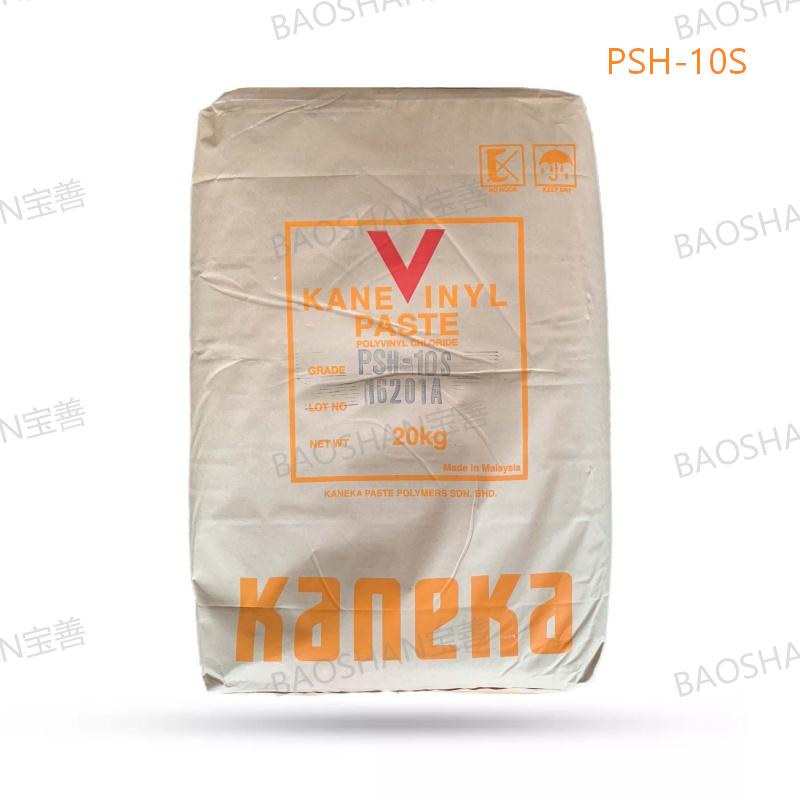
| PSH-10S | Kaneka (Japan) | 70 | approx. 2,000 mPa·s at 25°C (low) | ≤0.8% | Not stated in grade data | Food-grade cap gaskets, food packaging and sealing products, medical-grade soft PVC, high-transparency paste products |
| PR-G | Formosa Plastics (Taiwan) | 77.5–81.0 | 2,000–3,000 mPa·s (low) | ≤0.5% | ≤5 ppm | Medical gloves and dipped products, cap sealing gaskets, high-clarity surface layers |
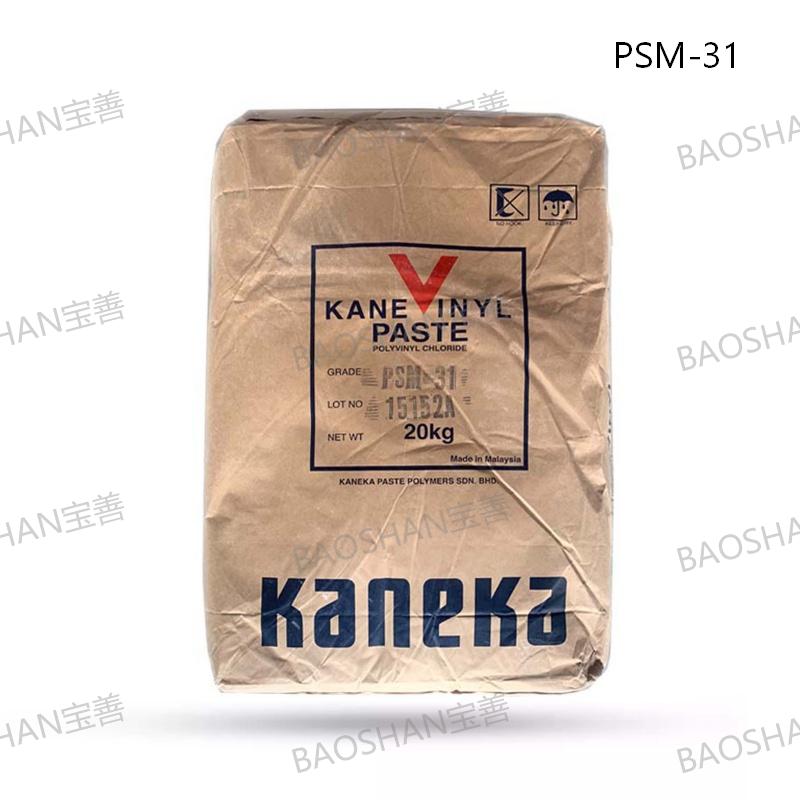
| PSM-31 (Kaneka) | Kaneka (Japan) | 72 | approx. 3,500 mPa·s (medium) | ≤0.8% | Not stated in grade data | Artificial leather, toy manufacturing, flooring and wall coverings, coatings and impregnations |
| SY-Z140 | Tangshan Sanyou | Medium molecular weight grade | Low paste viscosity with good viscosity stability | Not stated in grade data | Not stated in grade data | Bottle cap gaskets for food-grade applications with low migration, foamed wallpaper, floor leather |
| BJ-65 | Blend resin powder (medium powder) | 65 | Viscosity-reducing blend component | ≤0.4% | ≤5 ppm | Slush-moulded toys, automotive underbody coatings, bottle cap gaskets, matte finishes |
| SB-100C | Blend resin powder | 62–67 | Viscosity-reducing blend component | ≤0.4% | ≤5 ppm | Toy manufacturing, automotive underbody coatings, artificial leather, bottle cap gaskets |
Three interpretation rules follow from these figures. First, grades with K-value around 70 and low paste viscosity — PSH-10S is the clearest example — are the natural starting point for food-contact gaskets and sealing parts, because low viscosity supports clean mould filling while the grade is explicitly positioned as food-contact compliant. Second, higher K-value grades such as PR-G, at 77.5–81.0 with residual VCM ≤5 ppm, are chosen where mechanical strength, transparency and demoulding behaviour matter more than minimum viscosity, which is the case for medical gloves and other dipped products. Third, medium powder blend resins are not substitutes for paste resins; they are co-components used to reduce viscosity, control matte finish and lower formulation cost.
Plasticizer Selection for Medical and Food Contact
Plasticizer choice determines whether the finished article passes migration and extraction testing, and it also determines the processing window. Four families are commonly evaluated for regulated PVC paste work.
| Plasticizer | Key parameters | Compliance profile | Typical regulated applications |
|---|---|---|---|
| BASF Hexamoll® DINCH (di-isononyl cyclohexane-1,2-dicarboxylate) | CAS 166412-78-8 (outside USA) / 474919-59-0 (USA); dynamic viscosity 44–60 mPa·s at 20°C (ASTM D 7042); density 0.944–0.954 g/cm³ at 20°C; pour point −54°C; ester content ≥99.5%; phthalate content ≤0.01% | Passed EU REACH, RoHS and PAHS certifications; food-contact permits from Germany’s BFR and Japan’s Hygienic PVC Association; usable in toys for children under 3 years | Infusion tubes, blood bags, medical gloves, catheters, breathing masks; food packaging films, bottle cap gaskets, disposable tableware |
| Acetyl Tributyl Citrate (ATBC) | CAS 77-90-7; purity (ester content) ≥99.0%; relative density 1.045–1.055 g/cm³ at 25/25°C; freezing point ≤−80°C; flash point ≥204°C; heavy metals (as Pb) ≤10 mg/kg | REACH, RoHS, FDA and GB 4806 | Food cling film and packaging film, bottle cap gaskets, beverage straws; infusion tubes, blood bags and medical gloves; vinyl toys and teething toys under EN71-3 |
| Dioctyl Terephthalate (DOTP) | CAS 6422-86-2; purity ≥99.5%; density 0.981–0.985 g/cm³ at 20°C; flash point ≥210°C; freezing point −48°C (typical); volume resistivity ≥2×10⁹ Ω·m | Compliant with EU REACH and RoHS environmental standards, low toxicity | Medical devices including infusion tubes, blood bags and medical gloves; food packaging films; plastisol articles where viscosity reduction and extended storage life are required |
| GLOBINEX W-2050 polymeric polyester plasticizer | Viscosity 2,300–3,500 mPa·s at 25°C; colour 60 APHA; acid value 0.5 mg KOH/g; specific gravity 1.05 at 25/25°C; volume resistivity min. 1×10¹¹ Ω·cm | Low migration, low volatility, low toxicity with no impact on the properties of medical solutions, meeting medical-grade requirements | Medical supplies, food packaging materials, wire and cable, seals and automotive leather interiors; PVC accounts for approximately 62% of its application base |
The choice between them is driven by the failure mode the project is most exposed to. Where low-temperature flexibility matters — medical hoses and gloves that may be stored cold — a freezing point of ≤−80°C (ATBC) or a pour point of −54°C (DINCH) is the relevant figure. Where long-term extraction resistance matters — a part in continuous contact with a solution — a polymeric polyester plasticizer such as GLOBINEX W-2050, with low migration and low volatility, is the more defensible starting point. Where electrical insulation and high filler loading matter alongside food contact, DOTP is frequently the compromise.
Stabilizer Selection: Phenol-Free Ca/Zn Systems
Heat stabilizers protect the resin during the 160–200°C window typical of plastisol processing. In medical and food-contact formulations, the requirement is a phenol-free calcium/zinc system with no lead, cadmium or heavy metals, combined with sufficient thermal stability to avoid yellowing in transparent parts.
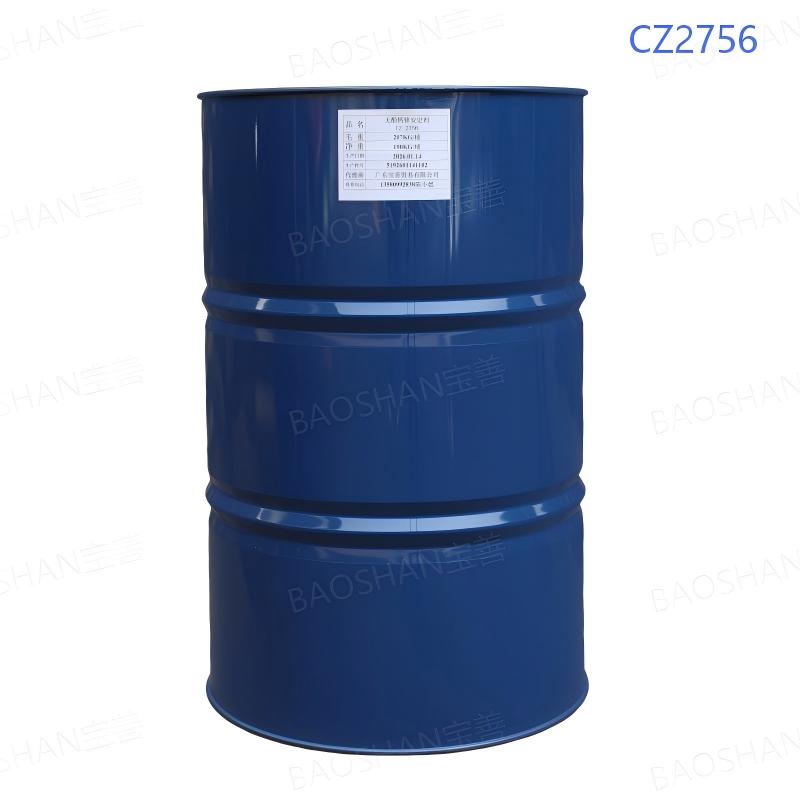
CZ-2756 is a representative phenol-free Ca/Zn stabilizer for this segment: density 1.02–1.08 g/cm³ at 25°C, viscosity 200–250 mPa·s at 30°C, acid value ≤0.5 mgKOH/g, moisture ≤0.1%, flash point ≥180°C (COC), volatile organic compounds ≤0.5%, and phenolic substances not detected. Thermal stability measures ≥30 minutes at 180°C (Congo red). Its composition is calcium oleate 30%, zinc oleate 20%, zinc octoate 20%, calcium octoate 17% and antioxidant 13%. It carries EU REACH, RoHS, PAHS and EN71-3 (toy safety) certification and is positioned for children’s products and food-contact materials, with a recommended processing temperature of 160–185°C.
Alternative phenol-free Ca/Zn grades allow the stabilizer to be matched to the process rather than to availability. SC-1600C is a clear liquid with density approximately 1.05 g/cm³ at 20°C and viscosity 1,000–3,000 mPa·s at 25°C, applicable across 160–200°C and compliant with REACH, RoHS and FDA. CZ-190 has a specific gravity of 0.950–1.050 at 25°C and a flash point above 250°C. CT303TX specifies calcium content of approximately 1.5–2.0% and zinc content of approximately 0.5–1.0%, is compliant with EU REACH, RoHS and GB 4806 food-contact standards, and is typically dosed at 1.5–3.0 phr of paste resin. SC-135 (ADK STAB) covers the same phenol-free positioning for paste PVC.
| Stabilizer | Density | Viscosity | Thermal stability | Certification / standard referenced |
|---|---|---|---|---|
| CZ-2756 | 1.02–1.08 g/cm³ at 25°C | 200–250 mPa·s at 30°C | ≥30 min at 180°C (Congo red) | REACH, RoHS, PAHS, EN71-3; phenolics not detected |
| SC-1600C | approx. 1.05 g/cm³ at 20°C | 1,000–3,000 mPa·s at 25°C | Stated as excellent; applicable 160–200°C | REACH, RoHS, FDA |
| CZ-190 | 0.950–1.050 at 25°C | Not stated in grade data | Flash point >250°C | REACH, RoHS, FDA |
| CT303TX | approx. 1.05 g/cm³ at 20°C | 1,000–3,000 mPa·s at 25°C | Stated as excellent; applicable 160–200°C | EU REACH, RoHS, GB 4806 |
When to Add a Viscosity Reducer
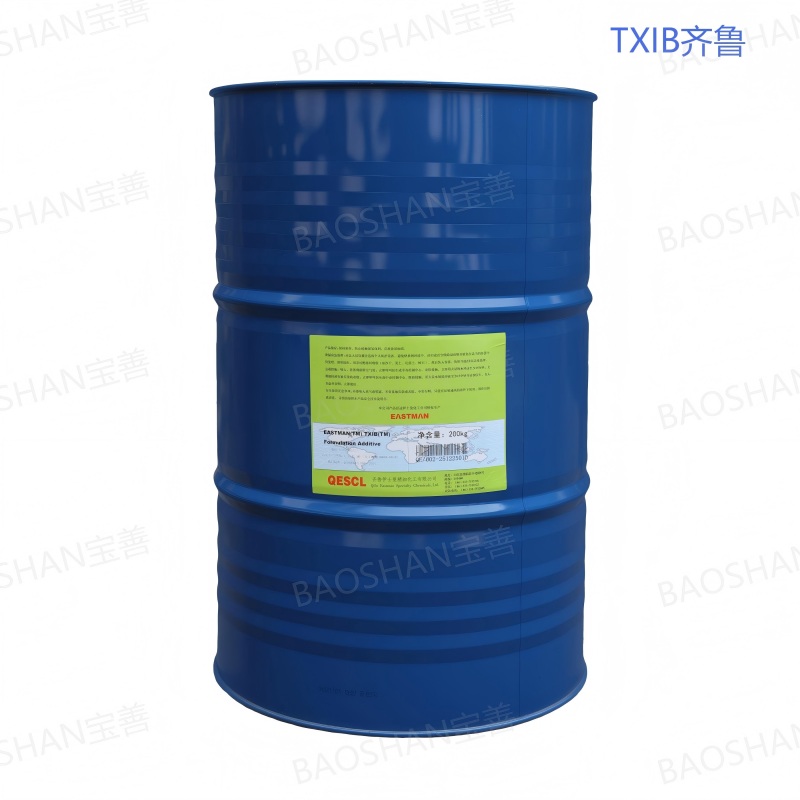
Viscosity reduction is not simply a cost exercise in regulated formulations. A paste that is too viscous traps air, produces wave marks in high-shear coating and fills complex moulds unevenly, which in turn produces rejects that look like material failures. Eastman TXIB™ Formulation Additive (CAS 6846-50-0, 2,2,4-trimethyl-1,3-pentanediol diisobutyrate) addresses this directly: Brookfield viscosity of 9 cP at 25°C, specific gravity 0.942–0.948 at 20/20°C, freezing point −70°C, flash point 143°C (Cleveland open cup) and assay ≥98.6% by weight. According to Eastman Chemical Company, TXIB™ is recognised as the lowest-viscosity additive available to the flexible PVC industry at 9 cP.
TXIB™ works as a primary plasticizer co-component and as a viscosity reducer. In practice it lowers initial plastisol viscosity, maintains viscosity stability, improves flow characteristics under high shear, allows higher filler loading, and releases entrained bubbles faster. It is also used to produce a drier, more scratch-resistant surface, which matters for printed or wipe-clean medical and food-contact surfaces. It is compatible with general-purpose plasticizers such as DINCH, DOTP and ATBC, and shows a useful synergistic effect with calcium-zinc stabilizers.
Where a powder route is preferred, medium powder blend resins deliver viscosity reduction without a liquid additive. BJ-65, at K-value 65 with 20–40 µm average particle size, volatile matter ≤0.4% and residual VCM ≤5 ppm, noticeably lowers paste viscosity and can reduce plasticizer consumption by 10–20% when blended with paste resin. SB-100C (K-value 62–67, average particle diameter 20 µm, volatile matter ≤0.4%, residual VCM ≤5 ppm) works on the same principle and additionally builds matte surface effects. Zhongtai PB-1000 (K-value 65, apparent density 0.32–0.35 g/cm³) reaches effective viscosity reduction at a recommended dosage of 20–30%.
Step-by-Step: From Contact Class to Validated Formulation
- Classify the contact scenario and fix the standard set. Decide whether the part touches food (film, cap gasket, hose, container) or the body (tube, bag, glove, catheter), then list the standards the buyer requires — for example REACH, RoHS, PAHS, EN71-3, FDA or GB 4806. The standard set determines which plasticizer and stabilizer families remain available, before any processing decision is made.
- Fix the process route. Slush moulding, dipping, coating, foaming and drip moulding place different demands on viscosity and gelation. These processes run in heating processing and continuous production mode on supporting equipment that includes rotomolding machines for vinyl toys, dripping machines, glue dispensers and PVC coating machines, and the formulation has to be written for the specific line rather than for the category.
- Select the paste resin by K-value and viscosity. Use K-value to set the mechanical and transparency target, then check paste viscosity at the actual resin-to-plasticizer ratio. A K-value 70 grade with approximately 2,000 mPa·s such as PSH-10S serves food-grade gaskets and high-transparency parts; a K-value 77.5–81.0 grade with residual VCM ≤5 ppm such as PR-G serves dipped medical products.
- Select the plasticizer against the dominant failure mode. Match low-temperature performance, migration resistance and volatility to the end use: DINCH for medical and food contact with low migration, ATBC for the coldest storage profiles and food-contact film, DOTP where insulation and filler loading matter, and a polymeric polyester plasticizer where extraction resistance over a long service life is the priority.
- Select a phenol-free Ca/Zn stabilizer and set the dose. Confirm that phenolic substances are not detected and that the grade references the certifications the buyer needs. Verify the thermal stability time against the actual processing temperature — a stabilizer rated for ≥30 minutes at 180°C is appropriate for a process running at 160–185°C.
- Tune viscosity with the lowest effective addition. Add TXIB™ or a medium powder blend resin only to the level needed to reach the target viscosity and bubble-release behaviour, then re-check plasticizer loading, since a reduction in plasticizer content changes flexibility.
- Validate with analytical testing, not with appearance. Screen the compound for phthalates, heavy metals, bisphenol A and organotin before committing to a production lot. Instrumentation such as Agilent GC-MS, ICP-MS and Waters LC-MS/MS supports this at trace level and produces the traceability record that regulated buyers ask for.
- Pilot, then scale with a defined replenishment cycle. Confirm gelation and demoulding on the production line, then lock the supply plan. A 20,000 m² warehouse with 16 liquid storage tanks and a safety stock of over three months for bulk European materials is the kind of buffer that keeps a validated formulation running when a shipment slips.
Application Scenarios and Process Fit
Food-grade bottle cap gaskets. The priority is low migration and sealing performance at high line speed. A food-contact paste resin such as PSH-10S or SY-Z140 combined with DINCH or ATBC, stabilised with a phenol-free Ca/Zn system, gives the low-migration sealing behaviour these closures require.
Medical gloves and dipped products. Dipped articles need strength, transparency and demoulding consistency. A high K-value paste resin such as PR-G, combined with DINCH for toxicological safety and low migration, is the conventional starting point.
Infusion tubing, blood bags and medical hoses. Continuous contact with fluids makes extraction resistance the leading criterion. DINCH is approved for medical devices and food-contact materials, while a polymeric polyester plasticizer such as GLOBINEX W-2050 is specified where durable plasticisation without surface tackiness and without affecting the properties of medical solutions is required.
Food packaging film and cling film. Odour, transparency and anti-aging behaviour dominate. ATBC and DOTP both support food-contact film, with ATBC favoured where low-temperature flexibility is also needed, and DOTP favoured where processing economics and filler loading matter.
Plasticised paste articles with matte or high-build surfaces. Blend resins such as BJ-65, SB-100C and PB-1000 combine viscosity reduction with controlled matte finish, which is useful for coated fabrics, artificial leather and decorative layers that also fall under food-contact or child-safety rules.
Frequently Asked Questions
Which certifications should a food-contact or medical PVC compound carry?
Compliance is documented at component level and then verified at formulation level. DINCH references EU REACH, RoHS and PAHS certification plus food-contact permits from Germany’s BFR and Japan’s Hygienic PVC Association. ATBC references REACH, RoHS, FDA and GB 4806. The phenol-free Ca/Zn stabilizer CZ-2756 references EU REACH, RoHS, PAHS and EN71-3, with phenolic substances not detected and no lead, cadmium or heavy metals. For context, EU REACH restricts DEHP, DBP and BBP to below 0.1% in toys and childcare articles, so a formulation that carries phthalate content at that level is not defensible in regulated products.
Can one PVC paste resin grade serve both food-contact and medical applications?
Partly, but the grade should be chosen by the dominant requirement rather than by convenience. PSH-10S (Kaneka, K-value 70, paste viscosity approximately 2,000 mPa·s at 25°C, volatile matter ≤0.8%) is positioned for food-grade cap gaskets, food packaging and sealing products, medical-grade soft PVC products and high-transparency paste products, so it spans both categories where low viscosity and clarity are wanted. PR-G (Formosa Plastics, K-value 77.5–81.0, paste viscosity 2,000–3,000 mPa·s, volatile matter ≤0.5%, residual VCM ≤5 ppm) is positioned for medical gloves and dipped products and for cap sealing gaskets, where higher molecular weight and demoulding behaviour matter more. In both cases the resin is only one part of the answer — the plasticizer and stabilizer still have to satisfy the same contact standard.
What drives the cost of a medical or food-contact PVC formulation?
Three levers, in order of impact. First, the plasticizer system: shifting from a commodity phthalate to DINCH, ATBC, DOTP or a polymeric polyester plasticizer changes the cost base, and the choice should follow the failure mode the project is exposed to rather than a general preference. Second, plasticizer loading: medium powder blend resins such as BJ-65 can reduce plasticizer consumption by 10–20% when blended with paste resin, while retaining the viscosity and matte behaviour of the compound. Third, the balance between paste resin and blend resin: SB-100C can partially replace higher-cost paste resin and simultaneously lower paste viscosity, improving coatability and formability. Viscosity reducers such as TXIB™ also allow higher filler loading, which shifts cost out of the polymer system.
How should a new formulation be validated before mass production?
Validation should start at the additive level and end on the production line. Screen incoming materials for phthalates, heavy metals, bisphenol A and organotin before compounding, using analytical instrumentation capable of trace detection; this is the point at which an unsuitable stabilizer or plasticizer is normally caught. Then confirm paste viscosity and viscosity stability at the actual resin-to-plasticizer ratio, since viscosity drift — not initial viscosity alone — determines whether a long production run stays in specification. Finally, confirm gelation, foaming and demoulding behaviour on the target line, because a formulation that passes in the laboratory can still fail on a slush moulding or coating line where shear and dwell time differ. Formula design, formula optimisation and customised production are standard parts of this cycle for regulated projects.
What is the minimum order quantity and lead time for paste resin and additives?
Minimum order quantity starts at 20 kg, which is sized for laboratory and pilot validation rather than for full production, and standard lead time is 3–5 days. Monthly sales volume is in the region of 4,000 tons, supported by a 20,000 m² self-built warehouse and 16 liquid storage tanks holding a safety stock of over three months for bulk European materials. Quality control is based on sampling inspection under an ISO 9001 system, and testing services and technical support are provided alongside material supply. If you are specifying a medical or food-contact formulation and want to validate a resin, plasticizer and stabilizer combination before committing to production, request a sample or a quotation through baoshancl.cn and the technical team can align the material set with your processing route.
Next Step: Validate the Formulation, Not Just the Datasheet
Send the contact class, the target standard set and the processing route, and Guangdong Baoshan Trading Co., Ltd. will assemble a sample set of paste resin, plasticizer, phenol-free Ca/Zn stabilizer and viscosity modifier for laboratory and pilot validation. Samples start from 20 kg with a 3–5 day lead time, and formulation optimisation and compliance testing support are provided with the material.
Website: www.baoshancl.cn | Email: misscheng1984@163.com | Tel: +86 13580992838 | Address: Building 1, No. 26, Yingguang Road, Chang’an Town, Dongguan City, Guangdong Province
Conclusion
Medical and food-contact PVC is a formulation problem, not a material-selection problem. The workable sequence is to fix the contact class and standard set first, then choose a paste resin by K-value, paste viscosity, volatile matter and residual VCM; match a non-phthalate plasticizer to the dominant failure mode, whether that is low-temperature flexibility, migration or long-term extraction; stabilise with a phenol-free Ca/Zn system that references the required certifications; and use a viscosity reducer only to the level the process actually needs. Grades such as PSH-10S, PR-G, PSM-31, BJ-65 and SB-100C, paired with DINCH, ATBC, DOTP or GLOBINEX W-2050 and stabilised with CZ-2756 or an equivalent phenol-free Ca/Zn grade, cover most of the regulated paste PVC work currently specified in Southeast Asian and Chinese production.
Have Questions or Need More Details?
Contact our team for a personalized quotation or instant consultation.
Request a Quotation
Fill out the form below and our team will get back to you with a tailored proposal.
WhatsApp Direct Chat
Prefer to chat in real-time? Message us on WhatsApp for instant assistance & quick answers.
- Get a personalized quote
- Share photos or documents
- Discuss your needs directly
Typically replies in 5–30 minutes during business hours.