
Evaluating a PVC Vinyl Supplier's Lab Testing Capabilities: A Checklist for Toxics Control
Judge a PVC vinyl supplier by what its laboratory does with an incoming drum of plasticizer, not by what its certificate file says.
A certificate describes a specification. Batch testing describes the material that is actually sitting in the warehouse. For toy, food-contact, medical and coated-fabric programs covered by EU REACH, EN71-3 or GB 4806, that gap is the single largest compliance exposure a buyer carries into production.
This page is a working checklist for the laboratory side of PVC vinyl sourcing: which instruments a supplier should own, which substance groups matter, where testing has to sit inside the production process, and what documentary and commercial evidence to collect before a repeat order is placed. Guangdong Baoshan Trading Co., Ltd. is used as the worked example throughout. The company is a PVC vinyl material solutions supplier headquartered in Dongguan, Guangdong Province, China, with roots in manufacturing dating back to 1994, and it holds authorized distributor status for BASF Hexamoll® DINCH and Eastman TXIB in China.

Why a Certificate of Analysis Is Not a Batch Record
Most buyers evaluate PVC vinyl compliance the same way: they collect certificates of analysis (COAs), confirm that the plasticizer is described as phthalate-free on paper, and file the documents. The process looks sound and leaves a structural hole.
A COA is normally issued against a grade, not against a container. It records a K-value, a plasticizer type or a residual monomer limit, and it is usually produced upstream by the resin or additive manufacturer. Nothing in that document tells you what is inside the specific drum loaded onto your truck, how it was stored before dispatch, or whether the material in it was ever screened for the substances your destination market actually restricts.
Toxics risk in PVC vinyl is cumulative, because it comes from the whole formulation rather than from any single component:
- Plasticizers. Phthalate esters such as DEHP, DBP and BBP are restricted under EU REACH to concentrations below 0.1% in toys and childcare articles, and non-phthalate alternatives each carry their own limits. BASF Hexamoll® DINCH is specified with a phthalate content of 0.01% maximum.
- Stabilizers. Lead- and cadmium-based systems are being displaced by phenol-free calcium-zinc stabilizers, and residual phenol content has to be demonstrated rather than assumed. A stabilizer such as CZ-2756 is specified with phenolic substances not detected.
- Residual monomers. Vinyl chloride monomer limits in the low single-digit ppm range are written into paste and suspension resin specifications — for example, a residual VCM limit of 5.0 mg/kg on paste resin grades and 1.0 ppm on a suspension PVC resin powder such as Hanwha Ningbo HG-1000F.
- Additives and diluents. Viscosity reducers, film-forming additives and matting resins all enter the same plastisol and all contribute to the final substance profile of the finished article.
Because the risk accumulates, verification has to accumulate as well. A supplier that tests only finished compound, or only the first shipment of a newly qualified grade, leaves the widest exposure unmanaged: the material that arrives between those two events.
Industry Background: Why Incoming-Material Testing Moved Up the Sourcing Agenda
The volume behind regulated PVC is large enough that material-level compliance decisions now affect production planning, not just paperwork. Market Research Future estimates the global PVC paste resin market at USD 2.67 billion in 2024, projected to reach USD 4.473 billion by 2035. The same source reports that Asia-Pacific accounts for over 60% of global PVC paste grade resin volume, with China alone responsible for more than 45% of consumption. Note that published estimates for the paste grade segment differ between research houses depending on how paste or emulsion PVC is defined, so treat any single figure as a directional indicator rather than a fixed baseline.
Two adjacent markets reinforce the same trend. MarketsandMarkets valued the global eco-friendly plasticizers market at USD 5.03 billion in 2024, projected to reach USD 7.55 billion by 2030 at a 7.0% CAGR. Grand View Research valued the medical plastics market, which includes PVC for medical devices, at USD 61.4 billion in 2025 with a projected 6.0% CAGR. Growth in both segments is driven by substitution away from restricted substances rather than by volume alone.
Regulation sets the floor. The European Chemicals Agency restricts DEHP, DBP and BBP under REACH to concentrations below 0.1% in toys and childcare articles. On the material side, BASF states that Hexamoll® DINCH is approved for medical devices and food contact materials on the basis of low migration rate and toxicological safety — a claim a buyer can only confirm at the batch level through testing, not through the approval status of the grade.
The practical consequence for procurement is straightforward. Selection of a compliant chemistry is a starting condition, not an outcome. The outcome depends on whether the supplier can demonstrate, lot by lot, that the chemistry it specified is the chemistry it shipped.
The Checklist: Eight Things to Verify in a Supplier's Laboratory
Use the following eight points as a scoring sheet. Each one is written so that it can be answered with a document, a photograph, a test report or a site visit.
1. The laboratory is owned and operated by the supplier
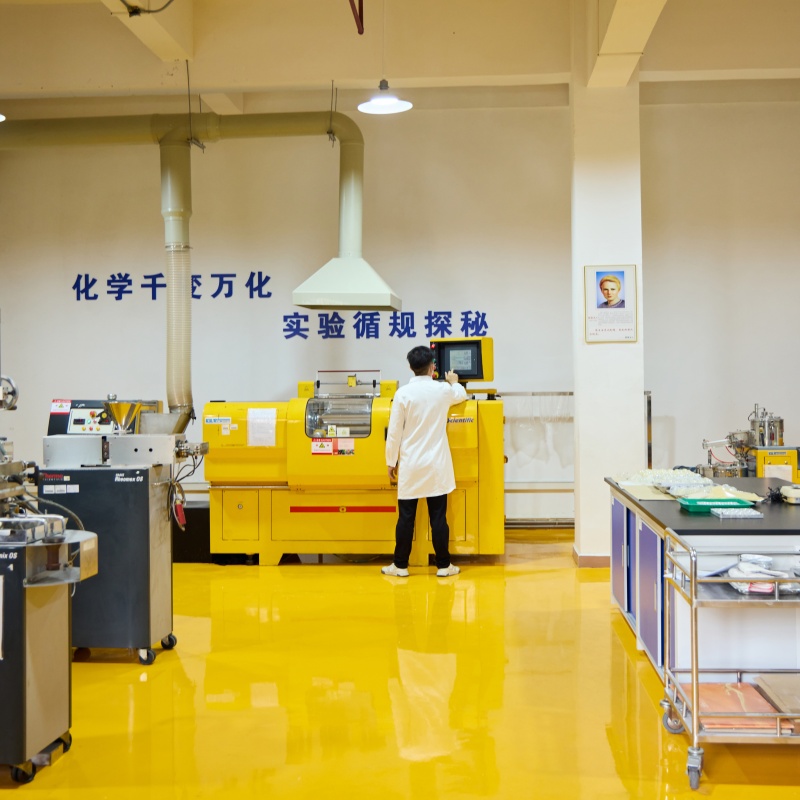
Ask who owns the instruments and who staffs them. A testing service you can purchase on request is not the same thing as a laboratory the supplier runs as part of its own material intake. Guangdong Baoshan Trading operates a high-standard research, development and chemical analysis laboratory as part of its operations.
2. The instrument set covers chemically different risk classes
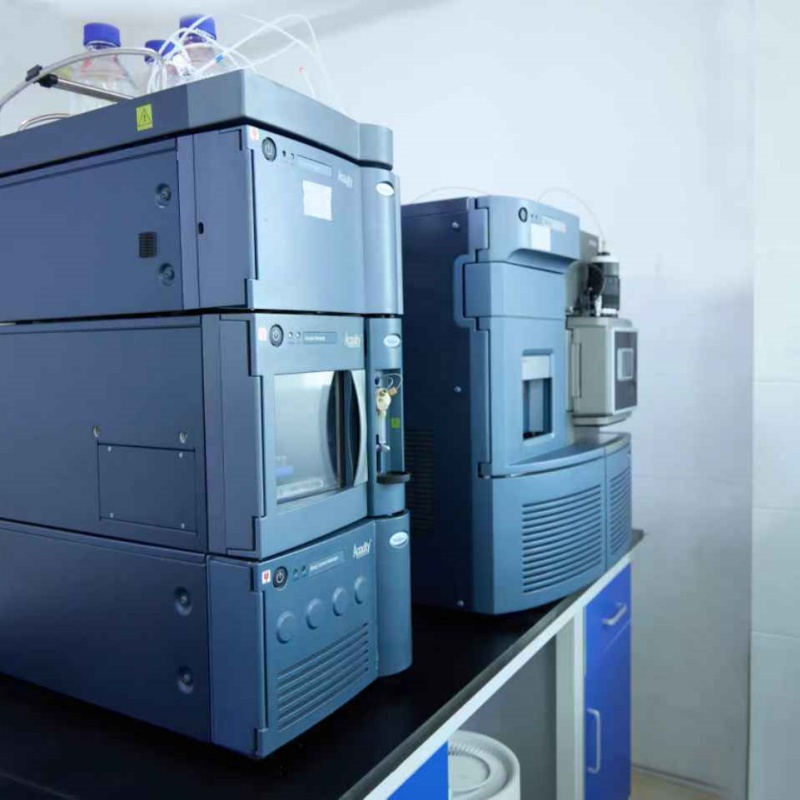
Phthalates and heavy metals cannot be screened on the same platform. A laboratory intended for toxics control needs mass spectrometry depth rather than a single general-purpose analyser. The Baoshan laboratory is equipped with high-precision mass spectrometers including Agilent GC-MS, ICP-MS and Waters LC-MS/MS instruments.
3. The substance panel matches your destination market's restricted list
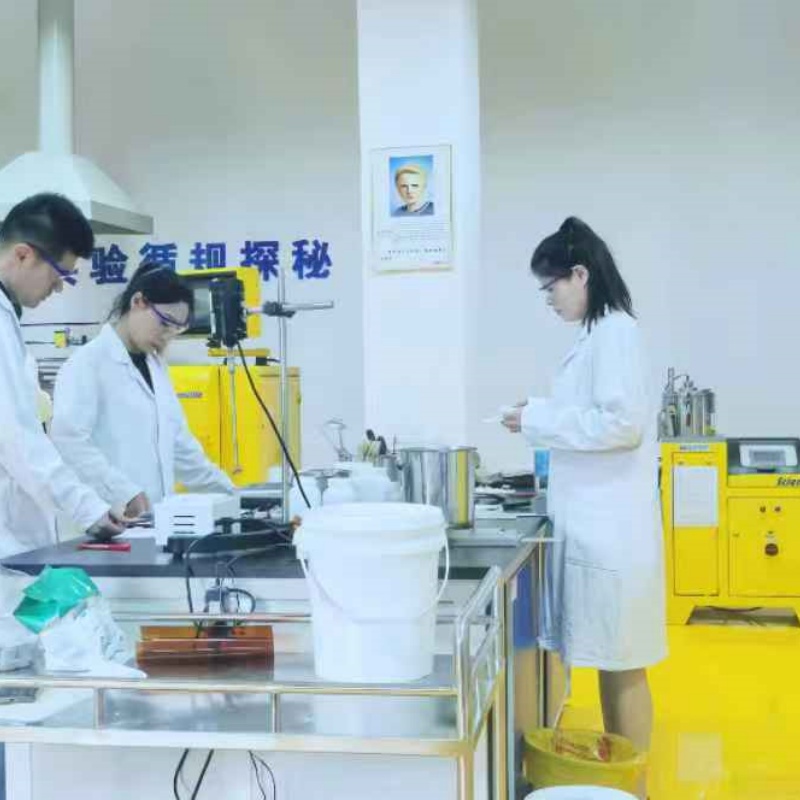
At minimum, the panel should name phthalates, heavy metals, bisphenol A and organotin. Baoshan's laboratory provides testing for high-risk substances covering phthalates, heavy metals, bisphenol A and organotin, and the service is offered free of charge as part of its customer support.
4. Testing sits at the incoming-material stage, not only at the finished-goods stage
This is the item that separates a compliance file from a control system. If testing happens only on finished compound, a non-conforming incoming lot has already been blended into production and spread across an entire batch. Baoshan's laboratory is set up to test incoming high-risk substances and to keep material sources traceable, which is the mechanism that makes lot-level acceptance or rejection possible.
Question to put in writing: “For the last three deliveries of plasticizer to this plant, provide the incoming test record, the date of receipt and the disposition decision for each lot.” A supplier with a functioning intake program answers within days. A supplier that tests only on request usually cannot reconstruct the history.
5. The laboratory supports formulation, not only pass or fail decisions
A laboratory that can only reject a lot creates cost. A laboratory that can adjust a formula creates options. Baoshan's customization services include formula design, formula optimization and customized production, and the company assists BASF with DINCH application development in the Asia-Pacific region — work that depends on the same analytical capability used for toxics screening.
6. The quality system behind the laboratory is auditable
Analytical results are only as trustworthy as the system that produces them. The company states that it adheres to the ISO 9001 standard and that it has passed a joint audit conducted by BASF's Petrochemical Division, Quality Management Department and Environment, Health and Safety Department.
7. Product authorizations are current and geographically valid
Ask for the authorization documents for the specific products you buy, and check the market coverage and validity window. As an example of the level of evidence available, the company holds an agency certificate from ADEKA (CHINA) CO., LTD for ADK calcium-zinc stabilizers, issued 21 January 2026 and valid through 31 December 2026, covering Vietnam, Indonesia and other Southeast Asian countries and regions, with a scope that includes PVC slush molding toy material, PVC coated material and phenol-free Ca/Zn stabilizers.
8. Documentation and commercial terms make repeat testing practical
Testing only becomes routine when the commercial setup supports small-lot verification. Relevant terms for the evaluated range include a minimum order quantity of 20 KG, delivery terms of CIF and FOB, acceptance criteria defined by the customer, and a typical lead time of 3 to 5 days. After-sales services include testing services and technical support, so a buyer can return to the laboratory when a formulation changes or a market regulation is updated.
Step-by-Step: How to Run the Evaluation
The evaluation can be completed in about two weeks if the questions are sent as a single package rather than one at a time.
- Define your restricted-substance list first. Write down the substances and limits that apply to your destination market before contacting any supplier. Include phthalates, heavy metals, bisphenol A and organotin as a default panel, then add market-specific entries. Suppliers answer a specific list far more accurately than a general question about compliance.
- Request the laboratory scope in writing. Ask for the instrument list, the substance panel and whether testing is performed in-house or outsourced. An in-house laboratory equipped with GC-MS, ICP-MS and LC-MS/MS is a materially different answer from a forwarding service to a third-party lab.
- Ask where in the process testing occurs. Incoming material, work-in-process and finished compound are three different control philosophies. The strongest answer describes testing at intake, because that is where rejection is still cheap.
- Read the method, not just the result. A test report should identify the substance, the analytical method and the reporting limit. A report that states only “compliant” cannot be compared with your own specification.
- Verify authorizations directly with the issuing body. Take the certificate number, the issuing authority, the covered products and the expiry date, and confirm them with the authority named on the document. Do this for every authorization that materially affects your product, including stabilizer and plasticizer agency certificates.
- Cross-check the first shipment independently. Have the first production lot tested by a third-party laboratory of your own choosing and compare the result against the supplier's own report. This is a one-time cost that establishes the baseline for every later shipment.
- Convert the result into a purchase specification. Turn the agreed substance panel, limits and documentation requirements into a clause attached to the purchase order, so that acceptance is defined before the material ships. Baoshan's stated acceptance criterion is customer acceptance, which makes a written specification the operative document.
- Re-audit on a fixed cycle. Repeat the laboratory review annually, or whenever a formulation, a supplier of a raw material or a destination regulation changes. Toxics control is a maintenance activity, not a one-time qualification.
Use Cases: Where Batch-Level Toxics Testing Changes the Outcome
Slush-molded vinyl toys and children's products
Toy programs are the most sensitive application for phthalate control, because REACH restricts DEHP, DBP and BBP to below 0.1% in toys and childcare articles. Plasticizer choice typically moves to non-phthalate grades such as BASF Hexamoll® DINCH, DOTP or ATBC, which is specified with a heavy metal content as lead of 10 mg/kg maximum and a freezing point of −80 °C or lower. Stabilizer choice moves to phenol-free calcium-zinc systems. Incoming-material testing is what confirms that a delivered drum matches that specification.
Food-contact PVC
Food packaging films, cap gaskets and food-grade hoses depend on low migration and low odour. Materials used in this segment are typically described as compliant with GB 4806 and FDA requirements alongside REACH and RoHS, and the relevant plasticizers include DINCH, DOTP and ATBC. Compliance statements of this kind are only meaningful when the specific delivered lot has been screened.
Medical-grade PVC
Infusion tubes, blood bags, catheters and medical gloves require low migration and toxicological safety. BASF states that Hexamoll® DINCH is approved for medical devices and food contact materials, and polymeric plasticizers such as GLOBINEX W-2050 are used where resistance to solvent extraction and low volatility matter over a long service life. A medical buyer should require lot-level test records, not only grade-level approvals.
Coated fabrics, artificial leather and automotive interiors
Coating and slush molding lines consume paste resin, blending resin, plasticizer and stabilizer in the same formulation. Additives such as Eastman TXIB, a viscosity reducer with a viscosity of 9 cP at 25 °C and an assay of 98.6% minimum, are described as free of phthalates and benzene rings, but the final article's substance profile still depends on every other component in the mix. Testing at intake is the only point at which each component can be individually cleared.
Distributors and importers serving Southeast Asia
For channel partners, incoming-material testing functions as a warranty against returns. A distributor shipping into Vietnam, Indonesia or other Southeast Asian markets carries the compliance liability of the finished article sold downstream, which makes documented intake testing a commercial asset rather than a technical nicety.
Case reference: a PVC vinyl toy manufacturer in Vietnam ran a project covering 300 vinyl machines. The supplier relationship has continued in close cooperation with stable production, and the materials were used with the result of stable molding for consistent toy quality and high efficiency for mass toy production. Shelf life under cool and dry storage was documented at two years.
Comparison Table: What Each Restricted Substance Group Requires
The table below maps the substance groups a PVC vinyl laboratory is expected to control against the documented reference limits in the evaluated material range and the verification a buyer should request.
| Substance group | Documented reference limit | Where the limit comes from | Verification to request |
|---|---|---|---|
| Phthalates (DEHP, DBP, BBP) | Below 0.1% in toys and childcare articles | EU REACH, per the European Chemicals Agency | In-house mass spectrometry report on the incoming lot |
| Phthalate content in a non-phthalate plasticizer | 0.01% maximum | BASF Hexamoll® DINCH specification | Certificate of analysis naming the test method used |
| Heavy metals, expressed as lead | 10 mg/kg maximum | ATBC product specification | In-house heavy metal screening report per lot |
| Phenolic substances | Not detected | Phenol-free Ca/Zn stabilizer specification such as CZ-2756 | Laboratory report plus stabilizer agency certificate |
| Residual vinyl chloride monomer | 5.0 mg/kg on paste resin grades; 1.0 ppm on HG-1000F suspension resin powder | Individual resin product specifications | Batch certificate of analysis with the residual VCM result |
| Bisphenol A and organotin | No single published limit; screening required | Supplier's in-house restricted-substance program | In-house laboratory screening report naming both substances |
Frequently Asked Questions
What compliance documents should a PVC vinyl supplier be able to produce?
A supplier should be able to produce three layers of documentation: a quality system document, product authorizations for the specific materials supplied, and batch-level test records. Guangdong Baoshan Trading states that it adheres to the ISO 9001 standard and has passed a joint audit by BASF's Petrochemical Division, Quality Management Department and Environment, Health and Safety Department. Its authorizations include an ADEKA (CHINA) CO., LTD agency certificate for ADK calcium-zinc stabilizers, issued 21 January 2026 and valid through 31 December 2026 for Vietnam, Indonesia and other Southeast Asian markets. Products in the range are described as compliant with REACH, RoHS, FDA and GB 4806 depending on the grade. Certificate numbers, covered products and expiry dates should always be confirmed with the issuing authority.
What laboratory equipment does a supplier need to test heavy metals and phthalates in-house?
Heavy metals and phthalates require different analytical platforms, so a single general-purpose instrument is not sufficient. A working in-house laboratory for PVC vinyl generally includes gas chromatography mass spectrometry for organic restricted substances such as phthalates, inductively coupled plasma mass spectrometry for elemental analysis including heavy metals, and liquid chromatography tandem mass spectrometry for substances that are not suited to gas-phase analysis. Guangdong Baoshan Trading operates a chemical analysis laboratory equipped with Agilent GC-MS, ICP-MS and Waters LC-MS/MS instruments, and provides testing for phthalates, heavy metals, bisphenol A and organotin.
Does in-house laboratory testing increase the cost of PVC vinyl materials?
In this case the testing is provided free of charge as part of the supplier's support, so it does not appear as a line-item surcharge. The larger cost question is the opposite one: rejected production batches, returns and re-testing fees after a compliance failure are far more expensive than intake testing. Commercial terms in the evaluated range include a minimum order quantity of 20 KG, delivery terms of CIF and FOB, payment before shipment, and monthly sales volume of around 4,000 tons.
Can I receive a sample and test data before placing a production order?
Yes. Sample quantities can be supplied from a minimum order quantity of 20 KG, with a typical lead time of 3 to 5 days. The laboratory's testing services are offered as part of the standard service package, and after-sales services include testing services and technical support, so a buyer can request verification data alongside the sample and compare it against their own specification. A practical sequence is to request the sample, the certificate of analysis and the relevant restricted-substance test report in the same message, then run an independent check on the first production lot.
How long does delivery take, and can supply continuity be maintained during a testing program?
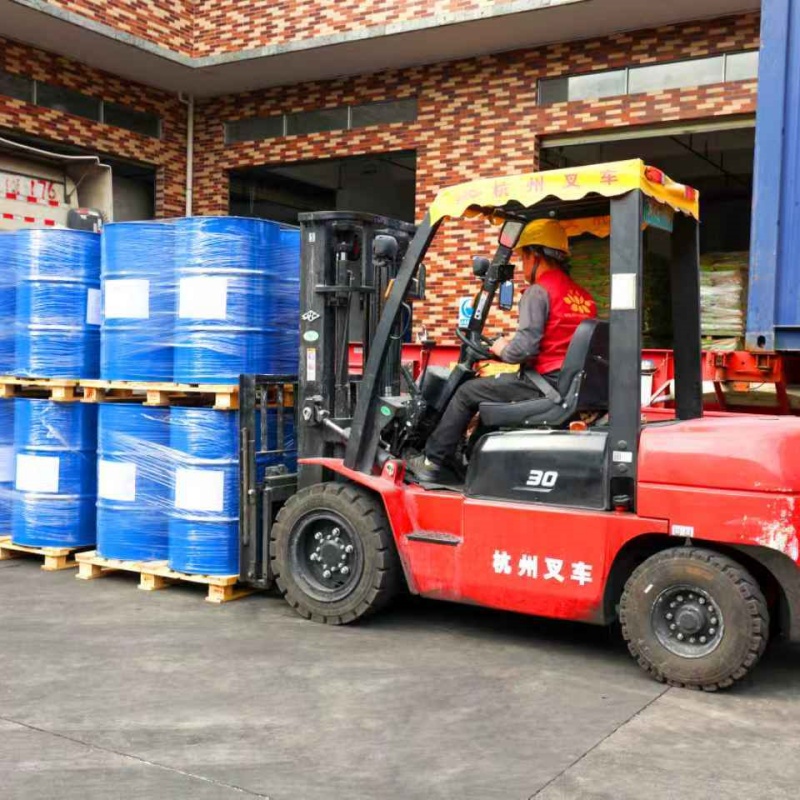
Typical lead time is 3 to 5 days, supported by a 20,000-square-metre self-built warehouse with 16 liquid storage tanks and a safety stock position of more than three months for bulk European materials. That inventory depth is what allows a buyer to add an intake testing step without adding weeks to the schedule. To start an evaluation, send your restricted-substance list and your target application to the supplier's technical team, and ask for the matching laboratory report, certificate of analysis and sample quantities in a single request.
Next Step: Send Your Restricted-Substance List
Guangdong Baoshan Trading Co., Ltd. provides PVC vinyl materials, free restricted-substance testing and formulation support for toy, food-contact, medical, coating and automotive programs, with a laboratory equipped for GC-MS, ICP-MS and LC-MS/MS analysis.
Share your target application and the substance limits that apply to your market, and request a sample with matching test data. Website: www.baoshancl.cn | Email: misscheng1984@163.com | Tel: +86 13580992838 | WhatsApp: +84 865388399
Conclusion
A PVC vinyl supplier's laboratory is not a marketing asset. It is the control point where a specification becomes a verifiable property of a delivered lot. Evaluate it the way you would evaluate a production line: who owns it, what it can measure, where in the process it operates, and what evidence it leaves behind.
Applied to Guangdong Baoshan Trading Co., Ltd., the checklist returns a consistent picture: an in-house research and development and chemical analysis laboratory equipped with Agilent GC-MS, ICP-MS and Waters LC-MS/MS instruments; free testing for phthalates, heavy metals, bisphenol A and organotin with traceability of material sources; an ISO 9001-based quality system audited jointly by BASF's Petrochemical Division, Quality Management and EHS functions; current agency authorizations including the ADEKACa/Zn stabilizer certificate valid through 31 December 2026 for Southeast Asian markets; and commercial terms that make lot-level verification practical, including a 20 KG minimum order quantity and a 3 to 5 day lead time.
Use the eight-point checklist on your next supplier review. If a supplier cannot describe what happens in its laboratory when a drum arrives, the certificate file will not protect your production.
Have Questions or Need More Details?
Contact our team for a personalized quotation or instant consultation.
Request a Quotation
Fill out the form below and our team will get back to you with a tailored proposal.
WhatsApp Direct Chat
Prefer to chat in real-time? Message us on WhatsApp for instant assistance & quick answers.
- Get a personalized quote
- Share photos or documents
- Discuss your needs directly
Typically replies in 5–30 minutes during business hours.