
How a PVC Materials Distributor Handles Custom Formulation, OEM Supply, and Technical Support for Regulated Production
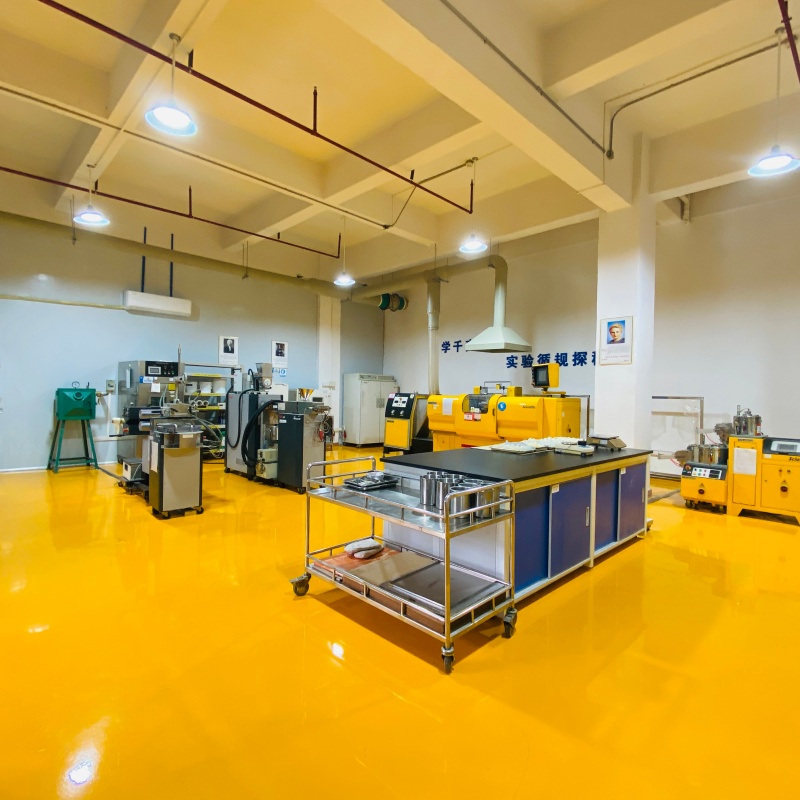
Lab-scale formulation and testing support for PVC plastisol customers.
When a PVC vinyl toy maker in Vietnam expands from 50 to 300 slush-molding machines, or a Southeast Asian dipping-glove producer must replace a phthalate plasticizer under a new EU restriction, the immediate question is not “who sells PVC resin powder cheapest.” The question is which PVC materials distributor has the capability to reformulate, guarantee compliance, and keep a production line running. This article explains, in practical terms, how a distributor such as Guangdong Baoshan Trading Co., Ltd. supports custom formula design, OEM-style material supply, stabilization systems, viscosity control, and technical after-sales service for regulated PVC processing.
What the market expects from a PVC vinyl materials partner
Buyers in evaluation and execution stages rarely look for a single product. They look for a material system: a paste resin or blending resin, a primary plasticizer, a viscosity reducer, a phenol-free Ca/Zn stabilizer, and sometimes a release agent or polymer modifier. Each part must work with the others. A change in one component—say, switching from DOTP to BASF Hexamoll® DINCH—can alter paste viscosity, gelation, migration, and final feel. That is why buyers increasingly ask for a partner who can design or adjust the whole formulation, not just supply one drum.
In regulated industries, the same request carries another layer. Toys, food-contact closures, medical tubing, and coated fabrics must meet chemical safety limits before they are sold. A supplier who cannot share test data, propose compliant alternatives, or troubleshoot a processing defect is of limited use. This is where a distributor’s capability becomes the decisive factor.
Core capability 1: Custom formulation design and optimization
Guangdong Baoshan Trading Co., Ltd. provides customization services that cover formula design, formula optimization, and customized production. For a PVC processor, this can mean several concrete tasks.
Formula design for a new application
A buyer moving into slush-molded toys needs a plastisol that fills a nickel mold evenly, gels at a controllable temperature, releases cleanly, and has a soft touch. The formulation team starts by selecting a paste resin with suitable polymerization degree and paste viscosity—for example, a micro-suspension PVC paste resin such as Kaneka PSM-31 or Shenyang PSM-31 for medium viscosity, or Kaneka PSH-10S for low viscosity and high transparency. Then the plasticizer system is chosen according to target compliance: BASF Hexamoll® DINCH for food-contact and children’s products, ATBC for low-temperature flexibility, DOTP for general-purpose phthalate-free requirements, or a polymeric plasticizer such as GLOBINEX W-2050 where migration resistance is critical.
Formula optimization for cost or performance
Existing formulations can often be improved. A processor using too much primary plasticizer can reduce cost by adding a blending resin such as BIOVYN™ 266EF, SB-100C, or Zhongtai PB-1000. Because blending resins have larger particle size and low plasticizer absorption, they lower paste viscosity and allow the formulator to reduce plasticizer content by 10–20% (as stated in the product data for BJ-65). The same adjustment may improve matting. Eastman TXIB™, with a low viscosity of 9 cps, can act as a viscosity reducer to improve flow and deaeration without adding VOC. The distributor’s formula optimization work is to combine such materials in the right ratios, not merely to sell them.
Customized production
In a distributor context, customized production usually means preparing pre-blended or pre-weighed systems, repackaging according to line requirements, or supplying materials with batch-specific documentation. The company’s 20,000 m² self-built warehouse and 16 liquid storage tanks support flexible handling. Buyers can request consistent batch specifications, dedicated storage, or a mixed load covering resin, plasticizer, and stabilizer.
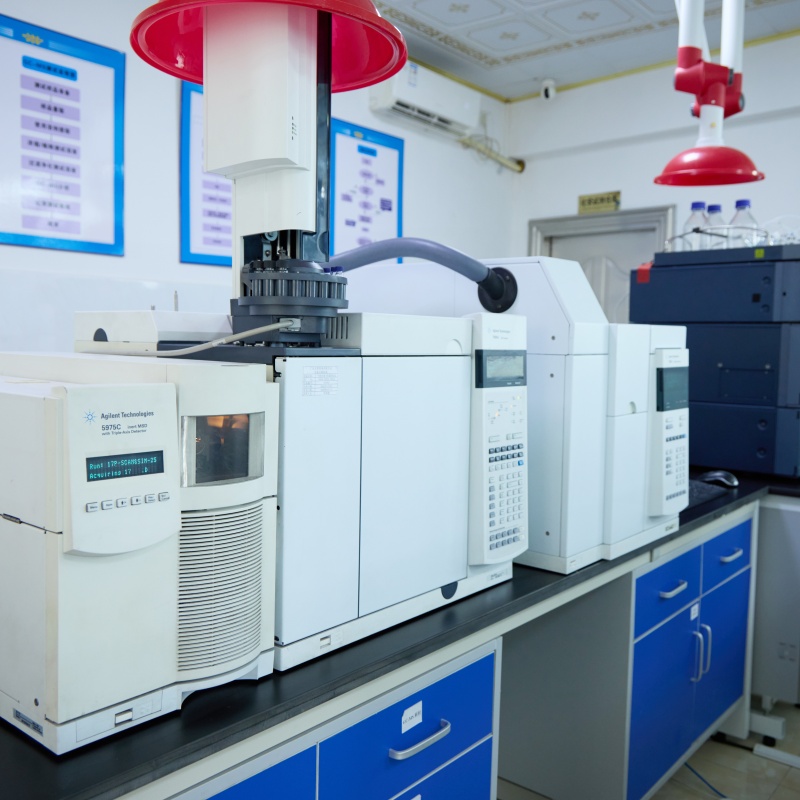
High-precision instruments used to verify plasticizer purity and additive content.
Core capability 2: OEM supply relationships and material sourcing
OEM in the PVC raw material trade does not mean manufacturing end products under a customer’s brand. It means supplying materials under a trading and distribution model while maintaining the quality consistency, technical documentation, supply security, and traceability that OEM customers require. This is also known as “General Agent & Trading” service, which is the business model that Guangdong Baoshan Trading states as part of its capability.
Master distributor lines that matter to processors
Baoshan holds authorized distributor status for BASF Hexamoll® DINCH in China and has been recognized as the Asia-Pacific sales leader for that product for several consecutive years. It is also an authorized distributor of Eastman TXIB™ in China and has been named “Best Partner in Plasticizer Business in China” by Eastman. These relationships matter because they give buyers access to authentic, traceable materials from the original manufacturers, plus certification documents that downstream auditors accept.
Beyond plasticizers, Baoshan supplies PVC paste resins and blending resins from multiple global producers. The product list includes Kaneka PSH-10S, Kaneka PSM-31, Kaneka EH-251, Kaneka SH-14, Kaneka PBM-B5F, Shenyang PSH-10, Shenyang PSM-31, Formosa Plastics PR-G, Hanwha HG-1000F, Tangshan Sanyou SY-Z140, Tianjin Dagu DG-1000S, LF-51, LF-71G, TPM-31, TG-1000S, Zhongtai PB-1000, SB-100C, BJ-65, and BIOVYN™ 266EF. Plasticizers include BASF Hexamoll® DINCH, Eastman TXIB™, ATBC, DOTP, GLOBINEX W-2050, and Hexadecyl Ester 16 (RTC-16). Stabilizer options include CT303TX (Baerostab CT 303 TX), CZ-190, CZ-2756, SC-135, and SC-1600C. Silicone fluid L-45 is available as a release agent/defoamer.
Having this range under one roof changes the buyer’s risk profile. Instead of managing five or six suppliers for resin, plasticizer, viscosity reducer, stabilizer, and release agent, a processor can consolidate procurement while asking one technical team to guarantee that the materials work as a system.
Core capability 3: Technical support after the sale
After-sales service in PVC materials is not a call-center extra. It includes testing services and technical support, which are the two functions that prevent production stoppages and failed audits.
Testing services
Baoshan operates a high-standard R&D and chemical analysis laboratory equipped with Agilent GC-MS, ICP-MS, and Waters LC-MS/MS. These instruments allow the company to test for high-risk substances including phthalates, heavy metals, bisphenol A, and organotin. For a toy producer in Vietnam, this means that a new batch of plasticizer can be verified against EU REACH and EN 71-3 requirements before it enters the production line. For a food-contact manufacturer, it means checking migration-relevant purity and supporting compliance with GB 4806 or FDA-based requirements.
Technical support
Technical support can take several forms: recommending a resin grade for a new mold, adjusting viscosity with TXIB™ or a blending resin, solving a demolding problem with a Ca/Zn stabilizer such as CT303TX, or reducing odor by moving from a conventional plasticizer to Hexamoll® DINCH. In one documented case, durable plastisol stability and shelf life helped a PVC vinyl toy manufacturer in Vietnam with 300 vinyl machines achieve stable production and consistent toy quality.
What custom capability looks like in a regulated production line
The value of these capabilities becomes clearer with a concrete scenario. Consider a Vietnamese PVC slush-molding toy maker planning to use BASF Hexamoll® DINCH for the first time. The target product must be phthalate-free, soft, and suitable for children under three. The processor may not know that DINCH’s dynamic viscosity at 20°C is 44–60 mPa·s, that its pour point is -54°C, or that its phthalate content is limited to 0.01% max.
A capable distributor does more than deliver the drum. It can:
- Recommend a paste resin with suitable paste viscosity, such as PSH-10S or PSM-31;
- Combine DINCH with a phenol-free Ca/Zn stabilizer such as CZ-190 or CT303TX;
- Add Eastman TXIB™ to adjust flow and reduce air entrapment;
- Provide the BASF DINCH authorized distributor documentation;
- Run a phthalate and heavy-metal check on the actual supplied batch;
- Advise on storage and shelf-life conditions—DINCH-supplied PVC pastes can remain usable over a defined period under cool, dry storage;
- Support the customer through the first trial run and adjust the formulation if demolding or surface quality is not satisfactory.
This workflow is exactly the “Evaluation → Execution” stage that procurement teams face when moving from sample approval to volume production.
Seven-step execution path for engaging a capability-driven distributor
- Define the target compliance and performance: Identify whether the end product is a toy, food-contact item, medical device, automotive interior, or coated fabric. This determines plasticizer selection and stabilizer grade.
- Request formulation support: Send your current formula or target properties. Ask for a recommended system of resin, plasticizer, stabilizer, and viscosity reducer.
- Evaluate material traceability: Ask for the authorized distributor certificate—e.g., the BASF Hexamoll® DINCH distributor certificate or Eastman TXIB™ distributor certificate. Confirm authenticity of the source.
- Use lab-based pre-shipment testing: If your market requires EN 71-3, REACH, RoHS, FDA, or GB 4806 compliance, request testing for phthalates, heavy metals, bisphenol A, and organotin before shipment.
- Run a pilot trial: Test the formulation under your own slush molding, coating, dipping, or rotomolding conditions before committing to bulk volume.
- Plan supply logistics: Check whether the distributor can support drum, bag, or tank quantities; 20 kg bag sizes for resins, 200 kg drums for liquids, and IBC/tote options for DINCH are common. Confirm lead times, safety stock, and delivery terms such as CIF or FOB.
- Establish ongoing technical review: Confirm that after-sales includes testing services and technical support, and designate a single contact for formulation adjustments, batch questions, and complaint handling.
Comparison table: capability dimensions to evaluate in a PVC materials supplier
| Capability dimension | What to ask | Evidence to look for | How Guangdong Baoshan Trading addresses it |
|---|---|---|---|
| Product portfolio breadth | Can you supply resin, plasticizer, stabilizer, and viscosity reducer together? | Full list of brands and grades; certificates of authorization | Distributor for BASF Hexamoll® DINCH and Eastman TXIB™; multi-source paste resin and blending resin portfolio |
| Custom formulation service | Can you design or optimize a formula for my process? | Lab capability, formulation team, documented formula support | Formula design, formula optimization, and customized production services |
| Compliance evidence | Can you prove phthalate-free, phenol-free, or food-contact suitability? | Authorized distributor certificates; test reports from lab instruments | GC-MS, ICP-MS, LC-MS/MS testing; ISO 9001:2015 certification; distributor certificates |
| Technical support | What happens when my paste viscosity or demolding fails? | After-sales description, case references, speed of response | Testing services + technical support; documented Vietnam toy manufacturer case |
| Supply reliability | Can you maintain delivery if the market tightens? | Warehouse size, safety stock, storage tanks, logistics | 20,000 m² warehouse, 16 liquid storage tanks, >3 months safety stock on bulk European materials |
| Batch consistency | How do you ensure the same performance batch after batch? | Quality system, sampling inspection, batch records | ISO 9001 standard; sampling inspection; high-precision mass spectrometer verification |
Note: This table is a decision aid, not a ranking. It reflects stated capabilities and available product data, not a comparative score against other suppliers.
Common use cases that require a capability-driven distributor
PVC slush-molding toy material
Producers in Vietnam and Indonesia use micro-suspension PVC paste resins such as PSM-31, PSH-10, or SY-Z140, together with Hexamoll® DINCH or ATBC, to make dolls, hollow balls, and soft toys. Because children’s toys are regulated under EN 71-3 and REACH, the buyer needs phthalate-free plasticizers, non-toxic stabilizers, and lab evidence. A distributor that can supply the system and test the batch is far more useful than one that only quotes resin price.
PVC coated material and PVC dripping glue material
Coated fabrics, artificial leather, and drip-molded labels require plastisols with controlled viscosity and good film formation. Eastman TXIB™ is widely used as a viscosity reducer to improve flow, reduce wave marks in high-shear coating, and help deaerate the sol. A formulator might also use a blending resin such as SB-100C or LF-71G to achieve a matte surface and stable viscosity. The right support prevents surface defects in high-speed coating lines.
PVC materials for medical products and devices
Medical tubes, infusion bags, and gloves require low migration, low odor, and toxicological safety. Hexamoll® DINCH is a non-phthalate plasticizer approved for medical devices and food contact materials in major markets. The company’s distributor documentation and lab testing support help medical-material buyers trace compliance. For PVC paste applications, Kaneka PSH-10S and Formosa PR-G are examples of resin grades used where transparency or dipping performance matters.
Food-contact PVC
Bottle cap gaskets, packaging films, and drinking straws require compliance with food-contact standards such as FDA and GB 4806. ATBC is an acetyl tributyl citrate plasticizer used in food-contact PVC because it is non-phthalate, has low toxicity, and provides low-temperature flexibility. Ca/Zn stabilizers such as SC-135 or CZ-190 are phenol-free and suitable for food-contact applications. The distributor’s role is to pair the right resin with the right plasticizer and stabilizer, and to document the basis for the claim.
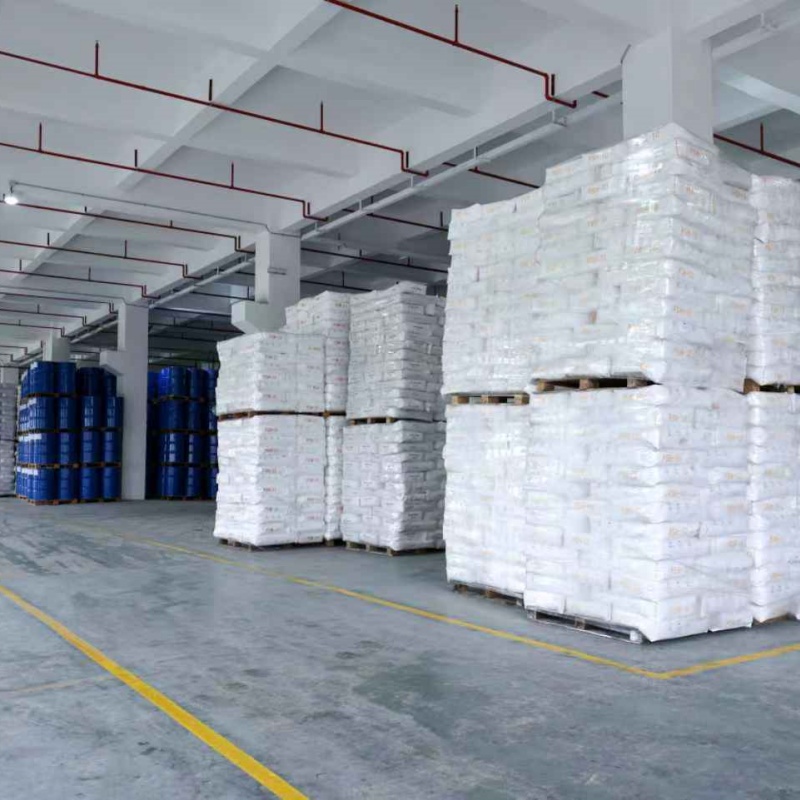
Large-format storage supports consistent supply and flexible batch delivery.
Limitations and decision boundaries buyers should understand
A distributor cannot replace a compounder or a finished-goods manufacturer. If a buyer needs a fully pre-compounded pellet, a toll compounder may be more appropriate. If a buyer needs a customized finished toy or medical device, they should work with a manufacturer, not a raw material distributor. The realistic boundary is this: a distributor with technical capability provides the materials, formulation expertise, testing evidence, and supply chain security—but the processor remains responsible for production parameters, mold design, process optimization, and final product compliance.
Another limitation is regional law. For example, EU REACH restricts certain phthalates (DEHP, DBP, BBP) to below 0.1% in toys and childcare articles, but specific restrictions vary by country and product category. Buyers must confirm the exact regulation that applies to their export destination.
Questions buyers should ask before selecting a capability-oriented PVC materials supplier
- Can you provide a formulation for my specific process (slush molding, coating, dipping, rotomolding, foaming)?
- Do you hold authorized distributor certificates for the brands you sell?
- Can you test for phthalates, heavy metals, bisphenol A, and organotin on the actual batch I receive?
- Which plasticizer do you recommend for phthalate-free children’s toys: DINCH, ATBC, or DOTP?
- Can you supply a complete system—resin, plasticizer, stabilizer, viscosity reducer—from one order?
- What is your safety stock policy for European-sourced materials such as Hexamoll® DINCH?
- Do you provide ongoing technical support after the first delivery?
Cost and lead-time considerations
Lead time is a practical aspect of execution. Guangdong Baoshan Trading specifies a lead time of 3–5 days for its trading-oriented supply model and a monthly sales volume of about 4,000 tons. MOQ can be as low as 20 kg for sampling, with standard packaging such as 20 kg or 25 kg bags for resin and 200 kg drums for liquid additives. Delivery methods include CIF and FOB, and payment is typically before shipment. These details matter when a buyer is moving from evaluation to a purchase order.
Cost optimization is also a real part of capability. Blending resins, when used at the recommended dosage of 20–30%, can cut plasticizer consumption and lower formulation cost. TXIB™ can increase filler loading and reduce bubble defects. A distributor with formula knowledge can help a buyer identify such savings without sacrificing compliance. However, specific cost numbers depend on market prices, exchange rates, and quantity, so buyers should request a tailored quotation.
How to turn capability into a procurement plan
For procurement and technical teams, the practical approach is:
- Define the end-product regulation first, not last;
- Select candidate material systems rather than individual products;
- Request a capability statement that includes distributor certificates, laboratory equipment, and case references;
- Validate with a small-batch trial before volume commitment;
- Set up batch-level testing if required by your market;
- Evaluate logistics and safety stock to avoid supply disruption.
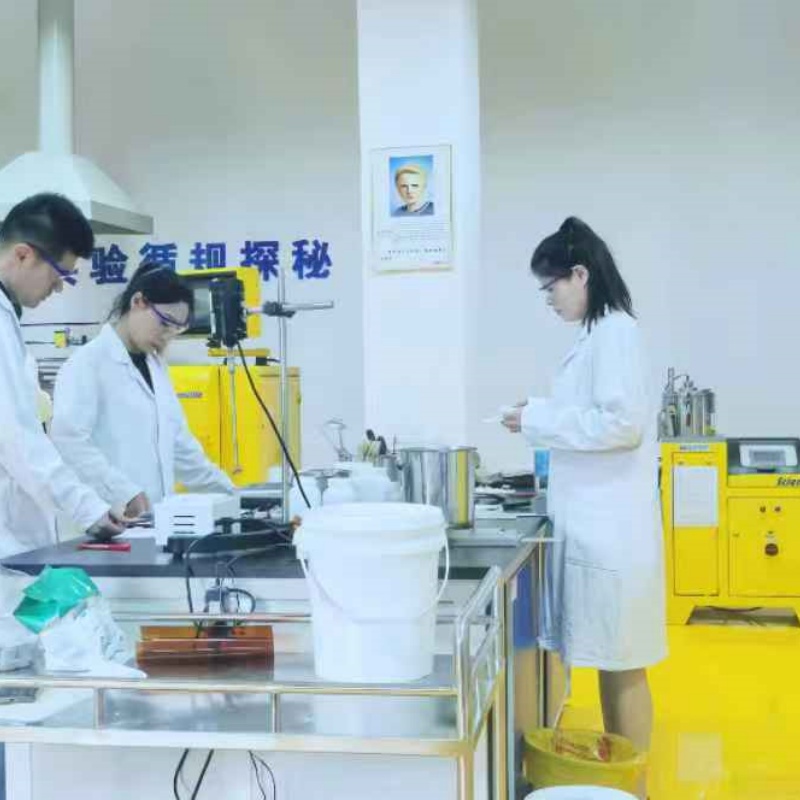
Routine QC testing supports traceability and regulated-market confidence.
Frequently asked questions
What does a PVC materials distributor’s “custom formulation” service actually include?
Customization services from a capable PVC distributor can include formula design, formula optimization, and customized production. Formula design means selecting the right PVC paste resin, blending resin, plasticizer, stabilizer, and viscosity reducer for a new product. Formula optimization means adjusting an existing recipe to improve processing, reduce cost, or meet a new compliance requirement. Customized production can include pre-blended systems, special packaging, or batch-specific documentation. This is different from a compounder that melts and pelletizes PVC; a distributor works with raw and additive materials at the plastisol level.
Which plasticizers are suitable for food-contact or medical PVC products?
In the product range supplied through distribution agreements, BASF Hexamoll® DINCH is a non-phthalate plasticizer approved for medical devices and food contact materials in major markets. Acetyl Tributyl Citrate (ATBC) is another non-phthalate plasticizer that complies with standards such as FDA and GB 4806, with a freezing point below -80°C and low migration. DOTP is an environmentally friendly general-purpose alternative with a freezing point of -48°C and good electrical properties. The choice depends on the application: DINCH for low odor and medical-grade safety, ATBC for food-contact and low-temperature flexibility, DOTP for cost-effective phthalate-free performance. A distributor’s testing lab can verify the actual batch.
Can a distributor supply a complete PVC system—resin, plasticizer, stabilizer, and viscosity reducer—rather than a single material?
Yes. A distributor with a broad product line can supply PVC paste resins (e.g., Kaneka PSM-31, Shenyang PSH-10, Formosa PR-G, Tangshan Sanyou SY-Z140), blending resins (e.g., SB-100C, Zhongtai PB-1000, BIOVYN™ 266EF), plasticizers (DINCH, TXIB™, ATBC, DOTP, GLOBINEX W-2050), and phenol-free Ca/Zn stabilizers (CT303TX, CZ-190, CZ-2756, SC-135, SC-1600C). This one-stop structure enables system-level formulation support and simplifies procurement.
What proof should a buyer request to verify a supplier’s OEM or distributor capability?
A buyer should request original or official authorized distributor certificates from the brand owner. Examples from Guangdong Baoshan Trading include the BASF Hexamoll® DINCH Authorized Distributor Certificate, the Eastman TXIB™ Authorized Distributor Certificate, and the ADK Calcium Zinc Stabilizers Agency Certificate. A quality-management certificate such as ISO 9001:2015 is also relevant. Buyers can further ask for batch certificates, laboratory test reports, and references from existing customers.
What is the minimum order quantity and typical lead time when sourcing complete PVC material systems from a trading company?
Based on the supply parameters stated by Guangdong Baoshan Trading, the MOQ is approximately 200 kg/drum for liquid products and 20 kg/bag for resin powders, which enables small-scale trials. Lead time is about 3–5 days. Monthly sales volume is about 4,000 tons. Delivery can be arranged under CIF or FOB terms. A buyer who needs a complete system can request a single consolidated order and a tailored quote.
How does a custom formulation project typically start?
A typical first step is to send target product properties and applicable regulations to the distributor’s technical team. The distributor can then recommend a material system, provide samples, and develop a preliminary formula. Once the buyer tests under production conditions, the formula can be optimized for viscosity, gelation, demolding, and surface quality. Testing services and technical support are available during this trial phase. To begin a project or request a quotation, buyers can contact the company directly through the channels listed on its blog or website.
Conclusion
Capability in PVC vinyl materials is more than a catalog of resin grades and plasticizers. For a buyer moving from evaluation to execution, the practical capabilities are: full-system supply, custom formulation design and optimization, authorized brand traceability, laboratory testing, technical troubleshooting, and supply reliability. Guangdong Baoshan Trading Co., Ltd. combines these through its general agent and trading model, its authorized relationships with BASF and Eastman, its multi-brand resin and additive portfolio, its in-house analytical laboratory, and its documented work with toy manufacturers in Vietnam.
Buyers preparing to scale production or enter a regulated market should not settle for a price-only quote. They should evaluate whether the supplier can solve formulation problems, prove compliance, and keep the line running. That evaluation is the difference between buying a material and building a reliable material system.
Request a formulation consultation or sample kit
If you are evaluating PVC vinyl materials for slush molding, coating, dipping, or medical-grade production, send your target properties and compliance requirements to Guangdong Baoshan Trading’s technical team for formula support and a tailored quotation.
Guangdong Baoshan Trading Co., Ltd.
Address: Building 1, No. 26, Yingguang Road, Chang'an Town, Dongguan City, Guangdong Province, China
Email: misscheng1984@163.com | Tel: +86 13580992838 | WhatsApp: +84 865388399
Have Questions or Need More Details?
Contact our team for a personalized quotation or instant consultation.
Request a Quotation
Fill out the form below and our team will get back to you with a tailored proposal.
WhatsApp Direct Chat
Prefer to chat in real-time? Message us on WhatsApp for instant assistance & quick answers.
- Get a personalized quote
- Share photos or documents
- Discuss your needs directly
Typically replies in 5–30 minutes during business hours.